Understanding Tea Culture in China and Why It Matters
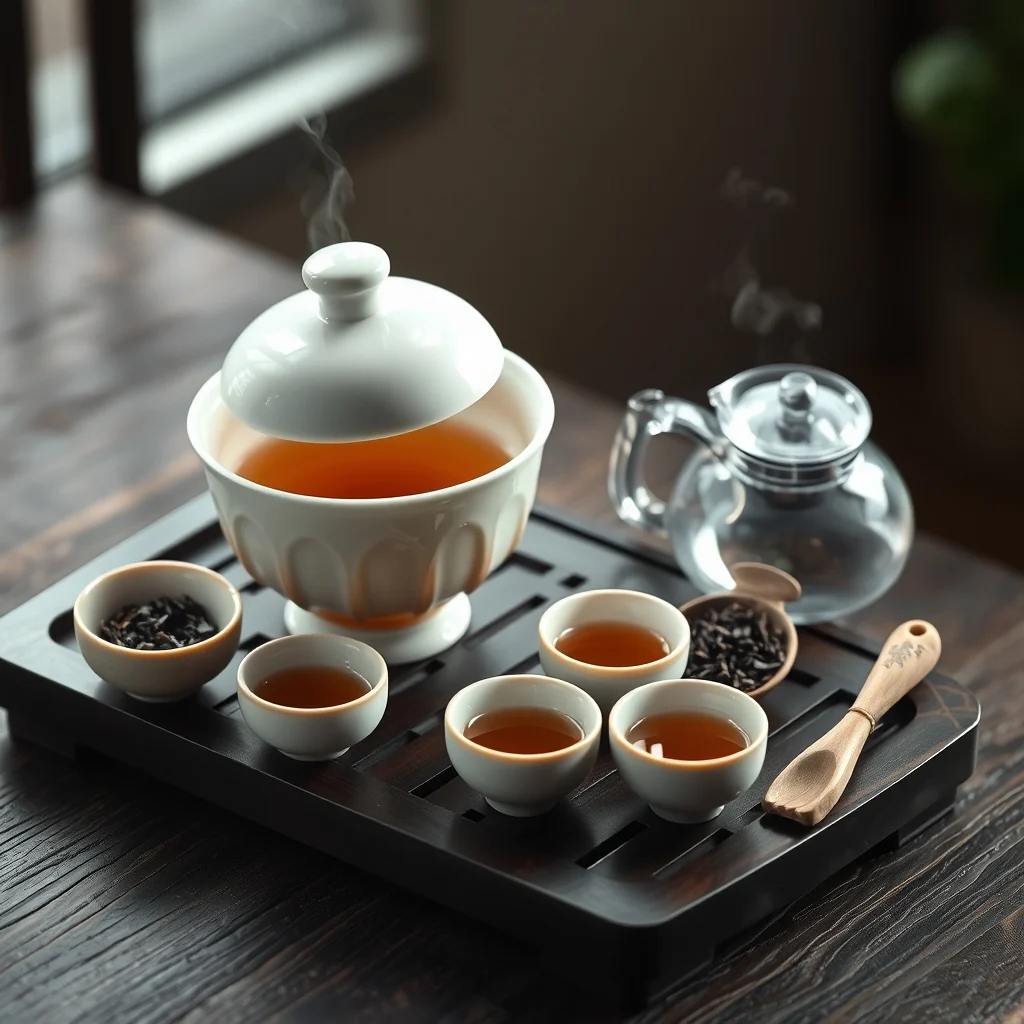
Last autumn, I watched an elderly man in a Chengdu teahouse pour hot water over the same oolong leaves seven times, each infusion revealing a different personality of the tea. No timer, no thermometer, just decades of fingers knowing exactly when to lift the lid. That moment shattered my assumption that tea culture in China was mostly ceremony and tourism.
What Makes Tea Culture in China Different from Anywhere Else
Most countries treat tea as a beverage. China treats it as a language. The distinction matters because it changes how you experience it as a visitor. When you sit at a tea table in Hangzhou or Guangzhou, you’re not ordering a drink. You’re entering a conversation that’s been running for two thousand years.
The Chinese character for tea (茶) literally depicts a person between grass and wood — humanity nestled in nature. That’s not poetic branding. It’s the operating system for everything that follows: how leaves are grown, processed, brewed, and shared.
Tea Culture in China Runs on Relationship, Not Recipe
Western tea culture obsesses over parameters: 95°C, three minutes, 2.5 grams per 150ml. Chinese tea culture obsesses over connection. The same tea brewed by three different hands yields three different results, and that’s considered correct, not inconsistent.
I learned this the hard way in a Wuyishan tea farmer’s courtyard. I’d brought my digital scale and timer, proud of my precision. The farmer smiled, poured by eye, and produced something infinitely better than my “perfect” brew. “Tea listens to the person making it,” he said. “Your tension went into the water.”
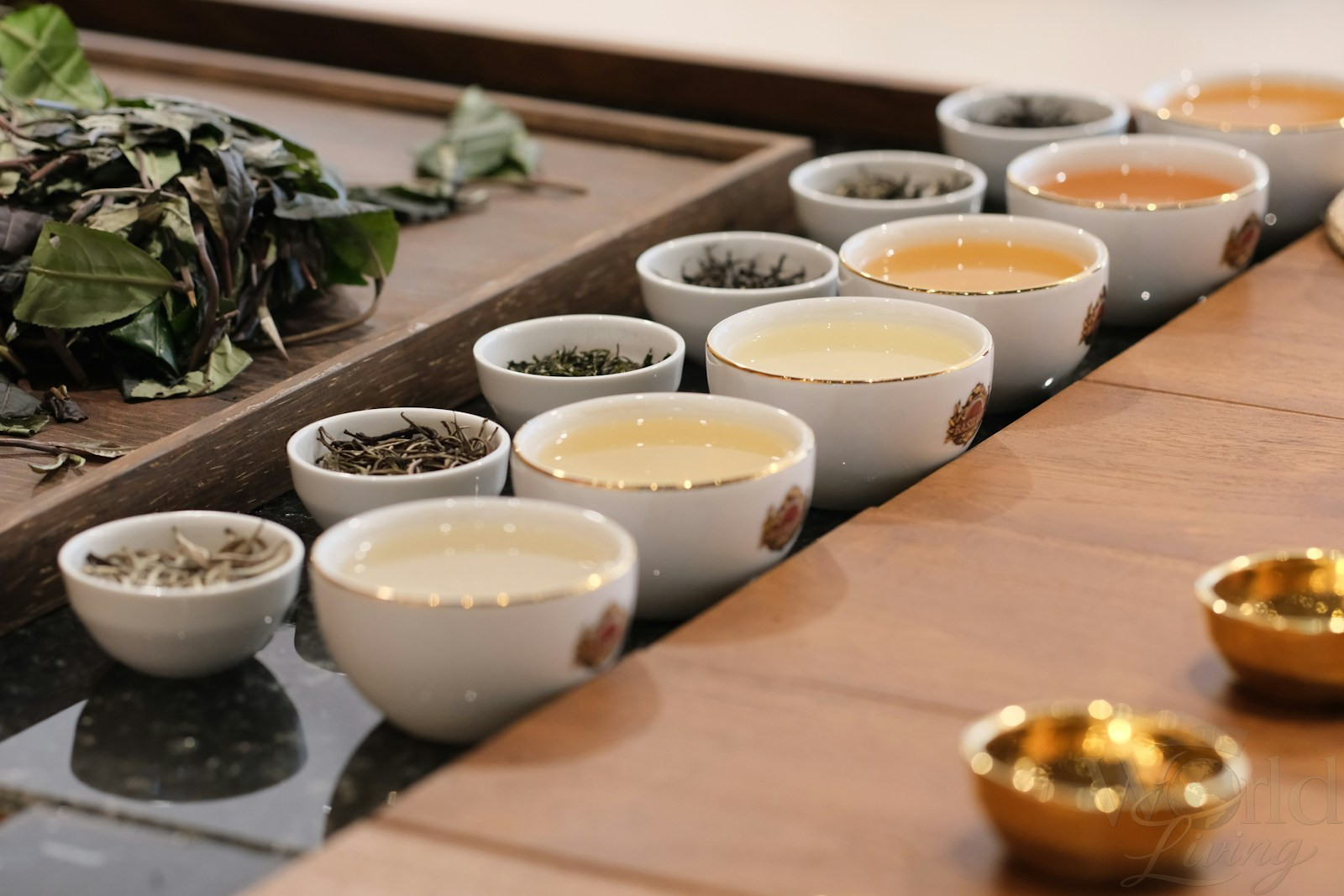
The Six Categories You Actually Need to Know
Forget the hundreds of named varieties. Chinese tea classification rests on six fundamental categories, defined by processing method. Everything else is regional expression or marketing.
Green Tea: The Unoxidized Truth
Green tea skips oxidation entirely. Leaves are fixed (killed-green) through heat — pan-firing in China, steaming in Japan — preserving chlorophyll and vegetal character. Longjing from West Lake, Biluochun from Suzhou, Huangshan Maofeng. Each tastes of its specific terroir: chestnut, orchid, fresh grass.
Buy spring harvest (pre-Qingming, early April) if budget allows. Summer picks taste flatter. Store in the freezer, sealed tight. Green tea dies fast.
White Tea: Barely Touched
Withered and dried. That’s it. No rolling, no firing, no oxidation encouragement. The result? Silver Needle (buds only) and White Peony (bud + two leaves). Fuding in Fujian owns this category.
Here’s what nobody tells you: white tea ages beautifully. A three-year-old White Peony develops honey and dried fruit notes a fresh one lacks. Five years? Medicinal complexity. I keep a small cake of 2018 Shoumei for winter colds — it works better than anything in my medicine cabinet.
Yellow Tea: The Forgotten Middle
Green tea’s rarer cousin. After fixing, leaves undergo “sealed yellowing” — wrapped warm and damp for hours, developing mellow sweetness without grassiness. Junshan Yinzhen from Hunan, Huoshan Huangya from Anhui. Production is tiny. If you find authentic yellow tea under $50/100g, question it.
Oolong: The Spectrum Master
Partial oxidation (10-80%) creates the widest flavor range in tea. Light oolongs (Taiwan high mountain, Anxi Tieguanyin) lean floral and creamy. Dark oolongs (Wuyi rock teas, Dancong) hit mineral, fruit, roasted nut, honey.
Dancong from Phoenix Mountain is the wine geek’s tea — dozens of named aroma profiles (honey orchid, almond, ginger flower) from single cultivars. A decent Dancong costs $30-60/50g. Exceptional ones hit triple digits. Worth it once to understand what tea can do.
Black Tea: Fully Oxidized, Not Just Breakfast
Chinese black tea (hongcha, “red tea”) differs from Indian/Ceylon styles. Keemun from Anhui — winey, floral, cocoa. Dianhong from Yunnan — golden tips, honey, sweet potato. Lapsang Souchong from Wuyi — the original smoked tea, piney and savory, not the liquid campfire most export versions become.
Try Jin Jun Mei — all buds, painstakingly produced, ridiculously expensive ($200+/50g), but the texture redefines what black tea feels like.
Dark Tea (Heicha): Fermented, Not Just Oxidized
Post-fermentation via microbial activity. Pu-erh is the famous subset, but Liu Bao from Guangxi, Fu Brick from Hunan, and Tibetan border teas belong here too. These teas are alive. They change in your storage. They’re measured in years, not months.
Raw (sheng) pu-erh starts bitter/astringent, mellows over decades. Ripe (shou) pu-erh undergoes accelerated fermentation — earthy, smooth, approachable young. Both have devoted followings. Both have counterfeit markets that would make luxury handbag fakers blush.
Gongfu Cha: The Method Behind the Magic
“Gongfu” means skill developed through practice. Not “tea ceremony” — that’s a Japanese term. Gongfu cha is a brewing methodology optimized for oolong and pu-erh, adapted for everything else.
The Ratio That Changes Everything
Standard western: 2-3g per 200-300ml. Gongfu: 5-8g per 100-150ml. High leaf-to-water, short steeps (5-30 seconds), many infusions (8-20+). This extracts the tea’s full arc — top notes, heart, finish — across multiple cups instead of muddling them into one.
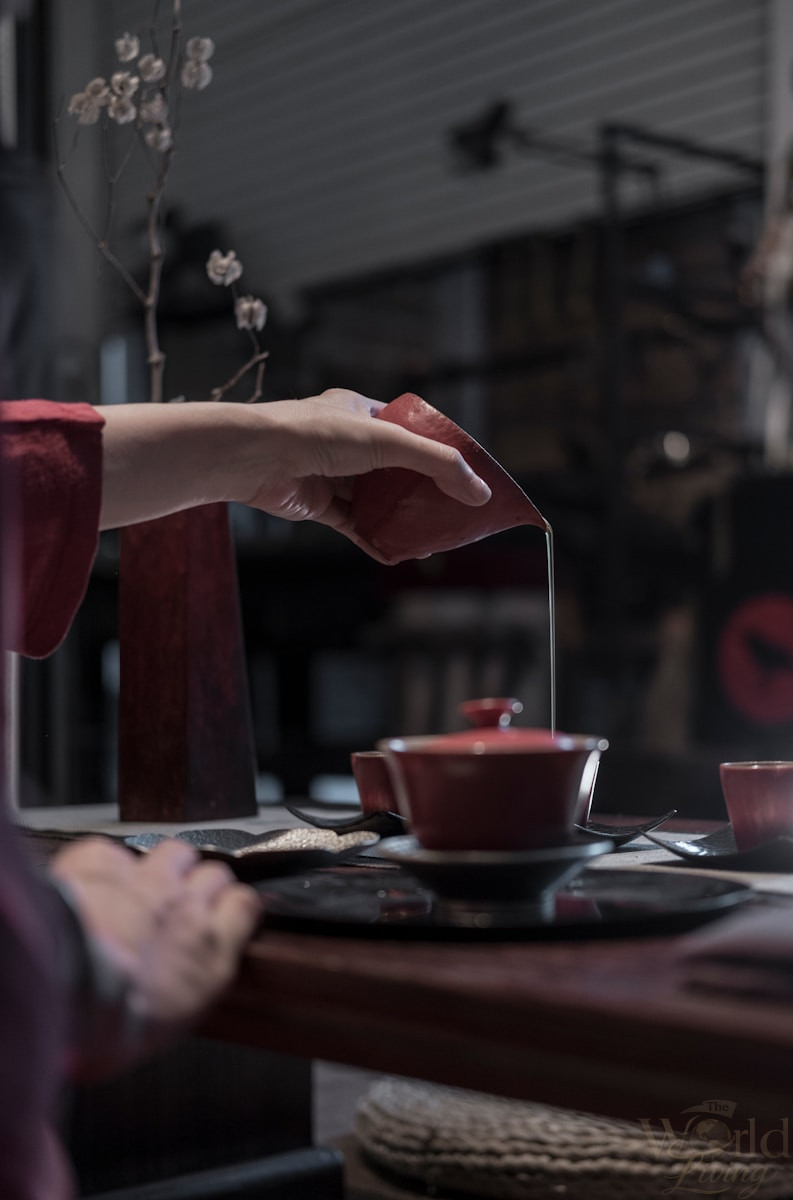
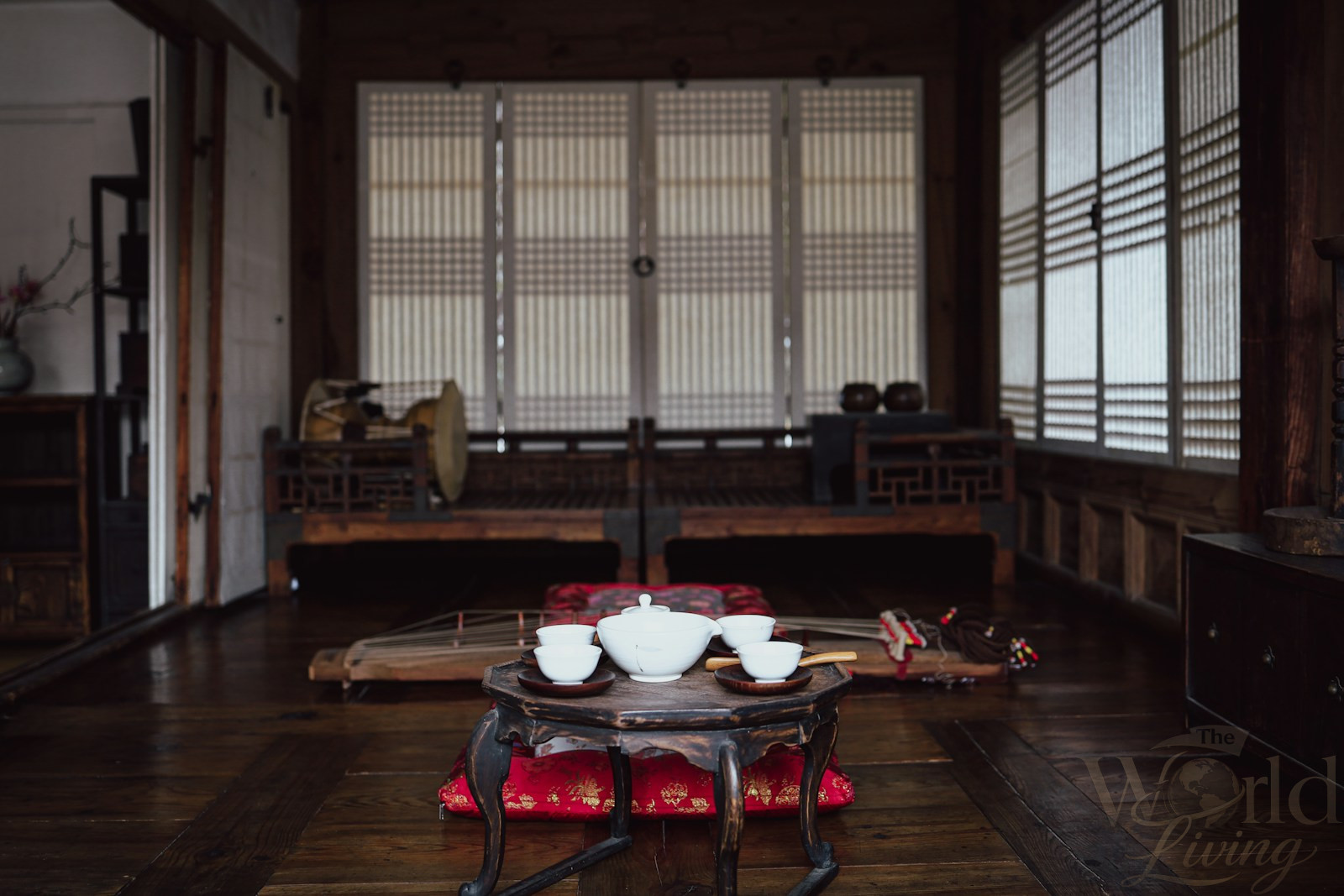
You need: a gaiwan (lidded bowl) or small clay teapot, a fairness pitcher (gongdao bei), small cups (30-50ml), a tea tray with drainage. Total starter kit: $40-80 for decent porcelain. Clay pots (Yixing, Chaozhou) come later — and they’re rabbit holes.
Water: The Silent Ingredient
Chinese tea masters rank water sources. Mountain spring > well water > filtered tap > distilled (dead) > boiled twice (flat). Mineral content matters. TDS around 50-150 ppm ideal. If your tap water tastes like chlorine, filter it. If it’s very hard, dilute with distilled.
Temperature by category: green/yellow 75-85°C, white 85-90°C, light oolong 90-95°C, dark oolong/black/dark tea 95-100°C. No thermometer? Watch bubbles. “Crab eyes” (tiny) = ~75°C. “Fish eyes” (larger) = ~85°C. “String of pearls” (rising columns) = ~95°C. Full boil = 100°C.
Regional Personalities: Where Tea Shows Its Face
Tea culture in China fractures beautifully by region. Each area has its own dialect of the language.
Fujian: The Oolong & White Tea Capital
Anxi for Tieguanyin. Wuyishan for rock oolongs (Yancha). Fuding for white tea. Chaozhou (technically Guangdong but culturally Fujianese) for the most intense gongfu style — tiny pots, boiling water, lightning pours, three sips per cup. Visit Wuyishan in April for spring harvest chaos. Stay in a tea farmer’s guesthouse. Wake to processing sounds.
Yunnan: Pu-erh’s Ancient Heart
Xishuangbanna, Pu’er city, Lincang. Ancient tea trees (qiaomu) — some 1,000+ years old — grow in biodiverse forests, not plantations. The difference in the cup is undeniable: depth, complexity, chaotic energy. Ethical sourcing matters here. Many “ancient tree” teas are blended with terrace material. Buy from vendors who show garden photos, harvest videos, farmer names.
Zhejiang: Green Tea Precision
Longjing (Dragon Well) villages around West Lake. The flat, sword-shaped leaves require pan-firing skill passed through families. Real West Lake Longjing has protected designation — 168 square kilometers only. Most “Longjing” sold globally comes from Sichuan or elsewhere. Taste difference: authentic has distinct chestnut, fresh bean, lingering sweetness. Imposters taste grassy-flat.
Guangdong: Dim Sum’s Tea Partner
Yum cha (drink tea) culture. Push-cart dim sum with endless pots of pu-erh, chrysanthemum, or tieguanyin. The tea cuts oil, resets palate, structures the meal. In Guangzhou, elders bring their own tea leaves to restaurants — pay a “tea washing fee” (洗茶费), brew their stash. Try it once. Order har gow, siu mai, cheung fun. Drink aged shou pu-erh between bites. Understand why this pairing evolved.
Buying Tea in China: Survival Guide
Tea markets overwhelm. Maliandao in Beijing, Fangcun in Guangzhou, Tianshan in Shanghai, Wuyi Plaza in Hangzhou. Thousands of shops. Prices range from $5 to $50,000 per 500g. Quality correlates with price — until it doesn’t.
Red Flags That Save Money
- “Imperial grade,” “reserve,” “special selection” — meaningless marketing terms
- Vacuum-sealed bricks with no production date, origin, or cultivar info
- Shopkeepers who discourage tasting or rush you
- “Gift boxes” prioritizing packaging over leaf — you’re paying for the box
- Prices far below market for famous teas (if Da Hong Pao costs $20/50g, it’s not Da Hong Pao)
Green Flags Worth Trusting
- Loose leaf in simple packaging with harvest date, origin village, cultivar, elevation
- Shopkeepers who brew multiple teas side-by-side for comparison
- Willingness to explain processing decisions (why this roast level, why this withering time)
- Tea farmers selling direct — increasingly common on WeChat, Douyin
- Return policies or “taste first, buy after” for expensive teas
My rule: never spend over $100 on a tea I haven’t tasted. For $20-50 teas, I’ll risk it on reputation. For cakes of pu-erh ($200+), I need multiple sessions. Reputable vendors understand this. Scammers pressure.
Tea Etiquette That Isn’t Performative
Tourists worry about elaborate rules. Locals care about three things: respect for the leaf, respect for the host, respect for fellow drinkers.
- Tap two fingers on the table when poured tea — silent “thank you” originating from Qing emperor traveling incognito
- Don’t blow on hot tea. Wait. Patience is part of the practice.
- Finish your cup before the next pour arrives. Leaving tea wastes the leaf’s effort.
- If hosting, pour for others first. Your cup last.
- Never tap the gaiwan lid against the rim — damages the edge, signals impatience
- Compliment specific qualities: “This infusion brought out peach” beats “Good tea”
That’s it. The rest is regional variation or tourism theater.
Seasonal Intelligence: When to Drink What
Chinese dietary theory (and common sense) aligns tea with seasons.
- Spring: Green tea, light oolongs — match rising yang energy, clear winter stagnation
- Summer: White tea, young sheng pu-erh, cold-brewed green — cooling, hydrating
- Autumn: Aged white tea, medium-roast oolongs, black tea — warming transition
- Winter: Dark oolongs, ripe pu-erh, aged heicha — deep warmth, digestive support
I keep a rotating seasonal stash. Right now (late October), a 2015 Liu Bao sits on my desk — earthy, sweet, grounding against damp chill.
Health Claims: What Holds Water
Tea contains caffeine, L-theanine, catechins (especially EGCG in green tea), theaflavins (in black/dark tea), polysaccharides (in dark tea). Research supports:
- Improved focus without jitters (caffeine + L-theanine synergy)
- Metabolic support — modest, consistent across studies
- Cardiovascular markers — long-term observational data strong
- Gut microbiome diversity — especially fermented teas
What’s overblown: “detox,” weight loss miracles, cancer prevention as guaranteed outcome. Tea supports health. It doesn’t replace medicine. The biggest benefit? The ritual itself — forced pause, sensory attention, social connection. That’s real physiology.
Pro Tips From Tea People I Trust
- Rinse every tea. First pour (3-5 seconds) discarded. Wakes leaves, removes dust, preheats vessels. Exception: delicate green teas — just a quick flash rinse or skip.
- Store categories separately. Pu-erh absorbs aromas aggressively. Keep it away from scented teas, spices, smoke. Green tea goes in freezer. Oolongs/blacks in cool, dark, stable humidity (60-70%).
- Use a tea pet. Those tiny clay figurines on tea trays? Pour first rinse over them. They “drink” tea, develop patina, become part of the ritual. Mine’s a lucky pig from Jingdezhen. Six years of tea baths.
- Track your sessions. Simple notebook: tea name, date, ratio, water, steeps, impressions. Patterns emerge. You learn your preferences. You stop buying teas you won’t drink.
- Share the last infusion. “Root of the tea” (茶根) — the final weak brew — traditionally offered to the host or eldest guest. Acknowledges the leaf’s full giving.
Key Takeaways
- Tea culture in China is a living language, not a museum exhibit — participation teaches more than observation
- Six categories (green, white, yellow, oolong, black, dark) explain 95% of what you’ll encounter
- Gongfu brewing (high leaf, short steeps, many infusions) reveals tea’s full arc
- Regional identity shapes everything: Fujian for oolong/white, Yunnan for pu-erh, Zhejiang for green, Guangdong for yum cha culture
- Buy from transparency: harvest date, origin, cultivar, farmer name > fancy packaging
- Etiquette boils down to respect for leaf, host, and fellow drinkers — three finger taps, patience, finish your cup
- Seasonal alignment isn’t superstition — it matches tea’s thermal nature to body needs
- The health benefits are real but secondary; the primary gift is structured attention
FAQ
What is the best Chinese tea for beginners?
A mid-range Tieguanyin (light roast) or Dianhong black tea. Both are forgiving to brew, widely available, affordable ($15-30/50g), and show clear quality differences between good and bad versions.
How do I know if pu-erh is authentic?
Buy from vendors showing garden photos, harvest videos, and farmer relationships. For aged pu-erh, provenance documentation matters. When in doubt, start with reputable western vendors who specialize in pu-erh — they’ve done the verification work.
Can I cold brew Chinese tea?
Absolutely. Green tea, white tea, light oolongs excel cold-brewed (5g/500ml water, fridge 4-8 hours). Dark teas less so. Cold brew extracts sweetness/amino acids, minimizes bitterness/astringency. Perfect for summer.
Is expensive tea actually better?
Up to a point. $50-100/50g often reflects genuine scarcity (tiny harvest, difficult processing, ancient trees). Beyond $200, you’re paying for provenance, age, or speculation. The quality curve flattens. A $30 tea brewed well beats a $300 tea brewed poorly.
What’s the difference between a gaiwan and a teapot for gongfu?
Gaiwan (porcelain) is neutral — shows the tea exactly as it is. Ideal for evaluation, green/white/yellow/light oolong. Clay teapots (Yixing, Chaozhou) absorb tea oils over seasons, muting high notes, deepening body. Dedicate one pot per tea type. Porcelain first. Clay later.
The elderly man in Chengdu didn’t perform tea culture. He lived it. Seven infusions, each poured into three tiny cups, shared with two strangers who became brief companions. No photos. No narration. Just tea doing what tea does: creating a pocket of attention in a distracted world. That’s the understanding no guidebook sells. You earn it one session at a time.