Best Copenhagen Neighborhoods: Where to Spend Your Weekend
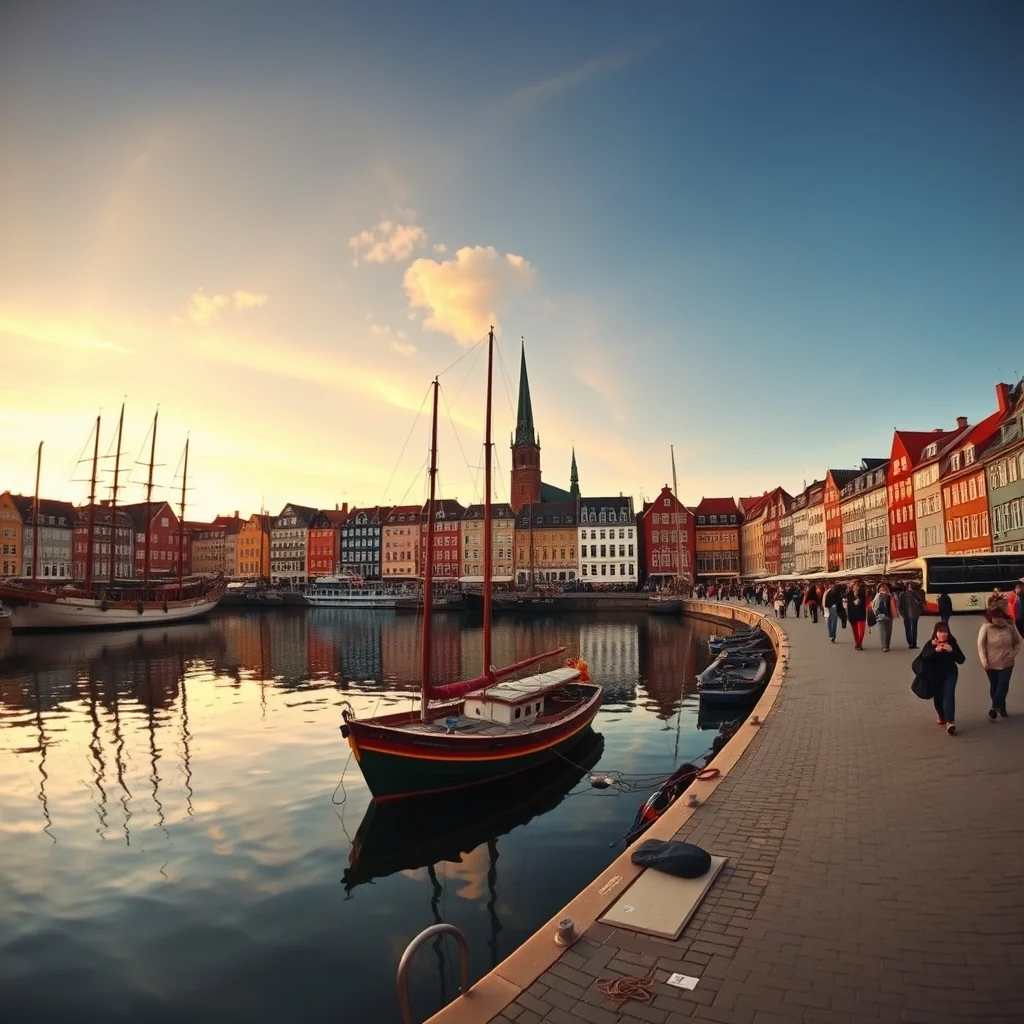
Most first-time visitors to Copenhagen make the same mistake: they try to see everything in two days and end up exhausted, spending more than expected and barely experiencing the character of the city. The truth is that Copenhagen neighborhoods each have their own personality, and choosing the right areas to explore can make a weekend feel far more relaxed and rewarding. Whether you’re interested in historic streets, creative food scenes, colorful canals, nightlife, or quieter green spaces, knowing where to go helps you make the most of your time.
Copenhagen is compact enough that several neighborhoods can be explored in a single weekend, but they are far from interchangeable. Indre By has the city’s historic landmarks and central streets, while Vesterbro brings restaurants, nightlife, and a creative atmosphere. Nørrebro is multicultural and energetic, Frederiksberg is leafy and sophisticated, Amager combines waterfront spaces with modern architecture, and Christiania offers a completely different cultural experience. This guide breaks down what makes each area worth visiting and how to fit the highlights into 48 hours.
Indre By: The Historic Heart of the City
Indre By, or Copenhagen’s Inner City, is the natural starting point for a first weekend in the Danish capital. The historic center is compact, packed with major attractions, and easy to explore on foot or by bicycle. Strøget runs through the heart of the area as one of the city’s best-known pedestrian shopping streets, while the surrounding side streets lead to historic squares, courtyards, cafés, churches, and elegant buildings.
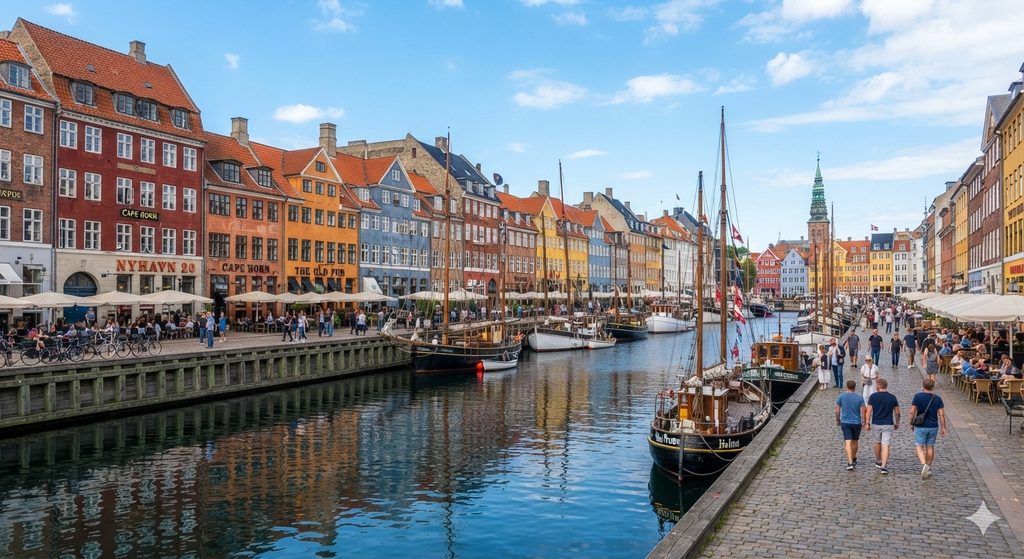
Nyhavn is one of Copenhagen’s most recognizable sights and an easy stop while exploring the central area. Its colorful 17th-century waterfront buildings line the canal and make it one of the city’s most photographed spots. From here, you can continue toward Amalienborg Palace, the home of the Danish royal family, where the changing of the guard takes place at noon. The Little Mermaid is another famous Copenhagen attraction, but it is actually located near Langelinie in the Østerbro area rather than in Indre By, so plan it as a separate stop.
Indre By is also one of the most convenient areas for a short visit because many major attractions are within walking distance. Instead of trying to cover the entire city at once, spend your first morning wandering through the historic streets, stopping for coffee or a Danish pastry, and then continue toward Nyhavn and the waterfront. Exploring early in the day can also make it easier to enjoy the most popular sights before they become busy.
What to do in Indre By
- Walk along Strøget and explore the surrounding streets for shopping, cafés, and people-watching.
- Visit Nyhavn for colorful waterfront views and a canal-side walk.
- Head to Amalienborg Palace and see the changing of the guard at noon.
- Explore the historic squares, churches, and streets around the Inner City.
- Try traditional Danish smørrebrød at Schønnemann, one of Copenhagen’s long-established places for open-faced sandwiches.
Vesterbro: The Cool, Edgy Alternative
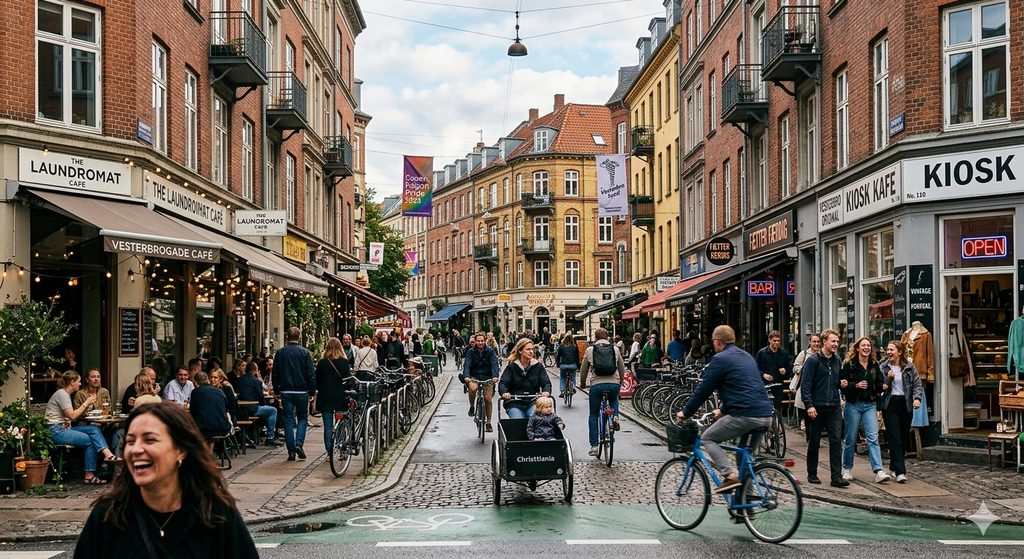
Once known for its red-light district, Vesterbro has developed into one of Copenhagen’s most popular areas for restaurants, independent shops, nightlife, and creative culture. The neighborhood still has some of its old gritty character, but it now mixes that history with fashionable cafés, boutiques, bars, restaurants, and a lively local atmosphere.
Istedgade is one of the main streets to explore, but some of Vesterbro’s appeal comes from wandering beyond the main road. The Meatpacking District, known locally as Kødbyen, is particularly worth visiting. The former meat-industry area has been transformed into a creative hub filled with restaurants, bars, galleries, and nightlife, making it one of the best places to experience Copenhagen after dark.
Vesterbro is also a practical choice if you want to stay close to the center without being based directly among the busiest tourist attractions. You can walk or cycle toward Indre By and easily combine Vesterbro with other nearby areas. For a weekend focused on food, coffee, nightlife, and a more local atmosphere, it is one of the strongest choices in the city.
Best spots in Vesterbro
- Explore Kødbyen for restaurants, bars, galleries, and nightlife.
- Walk along Istedgade and the surrounding streets for independent shops and cafés.
- Visit Superkilen Park when combining Vesterbro with nearby Nørrebro.
- Stop at Gasoline Grill if you’re looking for a popular Copenhagen burger spot.
- Explore Vesterbro’s smaller cafés, bars, and design shops rather than staying only on the main tourist routes.
Nørrebro: Multicultural and Lively
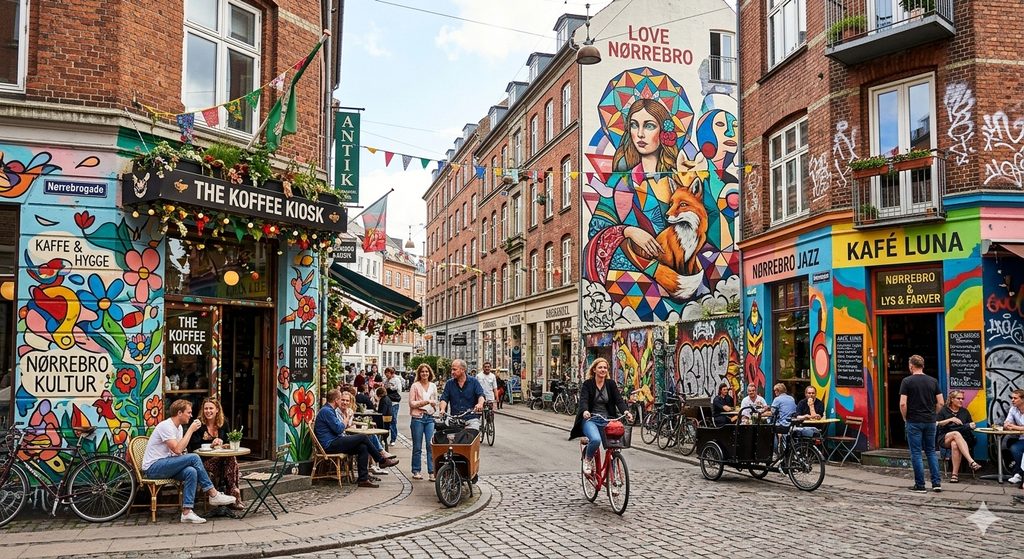
f Vesterbro feels energetic, Nørrebro takes that energy in a different direction. One of Copenhagen’s most culturally diverse neighborhoods, Nørrebro is known for its international food scene, independent shops, street culture, cafés, and lively atmosphere. Walking through the area can take you from traditional bakeries and Middle Eastern restaurants to modern Nordic dining, specialty coffee shops, and creative spaces within a few blocks.
Assistens Cemetery is one of Nørrebro’s most recognizable landmarks. It is an active cemetery as well as a peaceful green space, and it is the final resting place of famous Danes including writer Hans Christian Andersen. Nearby, streets such as Jægersborggade and Elmegade offer independent shops, cafés, restaurants, and a more neighborhood-focused experience.
Superkilen is another highlight. This distinctive public space celebrates cultural diversity through architecture, recreation, and objects inspired by communities around the world. Nørrebro works particularly well for travelers who want to spend less time checking off traditional landmarks and more time experiencing Copenhagen’s food, design, and everyday urban life.
Nørrebro highlights
- Walk through Assistens Cemetery and visit the grave of Hans Christian Andersen.
- Explore Jægersborggade for independent shops, cafés, and restaurants.
- Visit Superkilen for its distinctive urban design and multicultural influences.
- Wander along Nørrebrogade, the neighborhood’s main street.
- Try some of Nørrebro’s diverse international food options, from Middle Eastern cuisine to ramen and modern Nordic dishes.
Christiania: A Community Like No Other
No guide to Copenhagen neighborhoods would be complete without mentioning Christiania. Located in the Christianshavn area, this alternative community was established in the early 1970s on a former military site. Over the decades, Christiania has developed its own distinctive identity, combining art, handmade architecture, green spaces, music, workshops, cafés, and community life.
Walking through Christiania can feel very different from the polished streets of central Copenhagen. Colorful buildings, murals, gardens, creative spaces, and winding paths create an atmosphere unlike anywhere else in the city. Although Christiania has long been associated with Pusher Street and the sale of cannabis, that does not represent the whole community. The open drug market was dismantled in 2024, and current visitor guidance emphasizes Christiania’s culture, community, art, and green spaces.
Christiania is free to visit, but it is important to remember that this is a residential community rather than a conventional tourist attraction. Visit during the daytime, follow signs and local instructions, and be considerate when taking photographs. Some areas prohibit photography, and visitors should respect residents’ privacy and the community’s rules.
Christiania tips
- Visit during the day when the area is active and easier to explore.
- Respect signs, community guidelines, residents, and private spaces.
- Be considerate when taking photographs, especially where photography is prohibited.
- Explore the art, architecture, green spaces, and cafés rather than focusing only on Christiania’s past reputation.
- Combine Christiania with a walk around Christianshavn and its picturesque canals.
- Check current local guidance before visiting, particularly because conditions and visitor rules can change.
Frederiksberg: The Hidden Gem
Frederiksberg is technically its own municipality surrounded by Copenhagen, and it has a noticeably different atmosphere from the city’s busiest central districts. Sophisticated, green, and residential, the area is known for broad streets, cafés, restaurants, and Frederiksberg Gardens. It is a good choice when you want to slow down without traveling far from the city center.
Frederiksberg Gardens is one of the area’s biggest attractions and is particularly enjoyable on a pleasant afternoon. You can walk through the landscaped grounds, enjoy the open spaces, and combine the visit with nearby attractions such as Copenhagen Zoo or Cisternerne. The area also has plenty of cafés and restaurants, making it easy to turn a garden visit into a relaxed half-day.
The best way to experience Frederiksberg is without rushing. Start with coffee, explore the local streets, spend time in the gardens, and finish with dinner around Falkoner Allé or one of the surrounding streets. It offers a quieter alternative to the central city while still keeping you close to Copenhagen’s main attractions.
Amager: The Local Side of Copenhagen
Amager offers a different side of Copenhagen, combining residential neighborhoods, waterfront areas, beaches, modern architecture, and large-scale cultural and event venues. Islands Brygge is particularly popular for its waterfront atmosphere, while other parts of Amager offer access to Amager Strandpark, one of the city’s major coastal recreational areas.
Ørestad provides a striking contrast with its modern architecture and large contemporary buildings. The area is home to venues and attractions including Royal Arena and Bella Center, while Copenhagen’s broader Amager area also provides access to beaches, parks, and newer developments. It is a useful part of the city to explore if you’ve already seen the historic center and want something more modern.
Staying in Amager can also make sense for travelers who prefer a quieter base while keeping easy access to central Copenhagen. Instead of spending the entire weekend among the traditional tourist sights, you can use the metro or bicycle to reach the center and then return to a more residential part of the city.
Pro Tips for Exploring Copenhagen Neighborhoods
Here’s what is worth knowing before spending a weekend exploring Copenhagen:
- Use a bicycle when it makes sense. Cycling is one of the easiest ways to move between neighborhoods, although public transport is often more practical for longer journeys or when visiting several areas in one day.
- Don’t try to see everything. Pick two or three areas that match your interests rather than rushing through every neighborhood.
- Look for lunch specials or set menus. Copenhagen dining can be expensive, but lunch deals and smaller restaurants can offer better value than assuming every meal needs to be a full dinner experience.
- Plan your route geographically. Indre By, Vesterbro, Nørrebro, and Frederiksberg can be combined efficiently, while Amager and Christiania work well as separate excursions.
- Keep a backup payment method. Denmark is highly card-friendly, so you generally won’t need to rely on cash, but having a backup payment option is sensible.
- Use current transport apps. Rejsebillet allows travelers to buy public-transport tickets across Denmark, while the Rejsekort app can be used for buses, trains, metro, and light rail. Rejseplanen is useful for checking routes, schedules, prices, and travel information.
- Leave room for wandering. Some of Copenhagen’s best experiences come from simply exploring a side street, stopping at a café, or discovering a small shop you didn’t plan to visit.
FAQ: Planning Your Copenhagen Weekend
What is the best Copenhagen neighborhood for a weekend trip?
For a first-time weekend visit, Indre By is the easiest base because it puts you close to many of Copenhagen’s major attractions, shopping streets, historic buildings, and waterfront sights. However, Vesterbro is a better choice if you want more restaurants, nightlife, and a lively neighborhood atmosphere, while Nørrebro is ideal for travelers interested in multicultural food and local culture.
How much does it cost to visit Copenhagen neighborhoods?
Your weekend budget will depend heavily on your accommodation, dining choices, and the season. Central areas such as Indre By can be more expensive, while staying outside the historic center can give you more options. You can also keep costs under control by walking or cycling, using public transport, choosing casual restaurants, and focusing on free attractions such as parks, neighborhoods, and waterfront areas.
Is it safe to visit Christiania?
Christiania can be visited by tourists, but it is important to respect the community and follow current local guidance. Avoid restricted photography, follow posted signs, and remember that Christiania is a residential community. Cannabis remains illegal in Denmark, including Christiania, so visitors should not assume that the area’s history means Danish law does not apply.
What is the best time to visit Copenhagen neighborhoods?
Late spring through early autumn generally offers longer daylight hours and milder conditions, making it easier to explore the city on foot or by bicycle. Summer brings the longest days but also higher visitor numbers. If you prefer fewer crowds, consider visiting in spring or early autumn and keep in mind that Copenhagen’s weather can be changeable.
How do I get between Copenhagen neighborhoods?
Copenhagen’s neighborhoods are connected by cycling routes and an extensive public transport network. The metro, buses, trains, and light rail make it easy to move beyond the historic center, while cycling is particularly convenient for shorter trips. Use Rejseplanen to check routes and schedules, and current ticketing options such as Rejsebillet or the Rejsekort app for public transport.
Key Takeaways
- Indre By is ideal for first-time visitors who want to stay close to major attractions.
- Vesterbro combines food, nightlife, independent shops, and a creative atmosphere.
- Nørrebro offers multicultural food, street culture, independent businesses, and local energy.
- Christiania provides a unique cultural experience centered on community, creativity, and alternative urban life.
- Frederiksberg is a good choice for travelers who prefer green spaces, cafés, and a quieter atmosphere.
- Amager combines residential areas, waterfront spaces, beaches, and modern architecture.
- Copenhagen neighborhoods are relatively easy to connect by bicycle and public transport, making it possible to experience several different sides of the city during a weekend.
There’s no single perfect Copenhagen neighborhood — the best choice depends on what kind of weekend you’re after. If you want history and convenience, start with Indre By. If food and nightlife are your priorities, Vesterbro is a strong choice. For multicultural food and street culture, head to Nørrebro, while Frederiksberg offers a slower, greener experience. And if you want something genuinely different, Christiania adds a completely unique dimension to your trip.
The best part is that Copenhagen is compact enough to mix several areas into one weekend without spending your entire trip in transit. Choose a few neighborhoods that match your interests, leave some time for wandering, and let the city reveal itself beyond the major landmarks.
For more detailed travel guides and insider tips, explore our Denmark travel guide (/blog/denmark-travel-guide) and Scandinavian city breaks (/blog/scandinavian-city-breaks) collection. For current information on attractions, events, neighborhoods, and transportation, check official Copenhagen and Danish travel resources before your trip.