How to Make Authentic Vietnamese Pho at Home
The steam rising from my grandmother’s kitchen in Hanoi carried a scent that no restaurant menu could ever replicate — star anise, cinnamon, charred ginger, and beef bones simmered for eighteen hours. That memory is why I spent three years testing broth ratios, determined to make authentic Vietnamese pho for friends who’d never stepped foot in Vietnam. If you’re chasing that depth, the one that makes you close your eyes after the first sip, you’re not just following a recipe. You’re learning a rhythm.
Why Most Homemade Pho Falls Flat
Walk into any Asian market and you’ll see shelves of pho “kits” — spice packets, dried noodles, powdered broth bases. They promise authenticity in twenty minutes. Here’s the truth: real pho doesn’t negotiate with time. The broth demands patience. The spices demand respect. And the noodles? They demand freshness that no vacuum-sealed package delivers.
I’ve watched home cooks boil bones for two hours and call it done. I’ve seen them toast spices until bitter, skip the fish sauce finish, or use store-bought broth as a shortcut. Each mistake steals a layer of flavor. The result tastes like soup. Not pho.
The Anatomy of Authentic Vietnamese Pho
Broth: The Soul of the Bowl
Start with marrow-rich beef bones — knuckle, femur, oxtail. Blanch them first. Ten minutes in rolling water, then a thorough rinse. This removes impurities that cloud your broth and muddy the flavor. My aunt in Saigon insists on this step. “Lazy hands make cloudy broth,” she says.
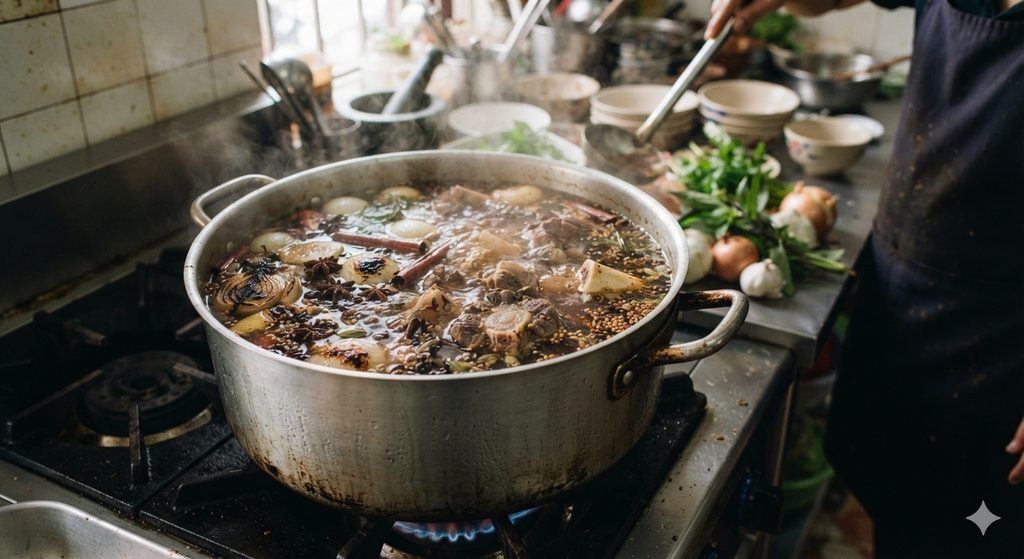
Return bones to a clean stockpot. Cover with cold water. Bring to a bare simmer. Not a boil. A simmer. Skim religiously for the first hour. Add charred onions and ginger (blackened over open flame or broiler), then your spice bundle: star anise, cinnamon stick, cloves, coriander seeds, fennel seeds, cardamom pods. Wrap in cheesecloth. Simmer twelve to eighteen hours. Yes, eighteen. That’s not a typo.
Season only at the end. Fish sauce, rock sugar, salt. Taste. Adjust. Strain through fine mesh. Chill overnight. Skim the solidified fat. What remains is liquid gold.
Noodles: Fresh or Nothing
Dried rice noodles have their place — stir-fries, cold salads. Not pho. Authentic Vietnamese pho demands fresh bánh phở, the flat rice noodles sold refrigerated in Vietnamese markets. They’re slippery, slightly chewy, and absorb broth without dissolving. If you can’t find fresh, soak dried wide rice noodles in warm water for twenty minutes, then blanch thirty seconds. But seek the fresh ones. The texture difference is everything.
Meat: Precision Over Variety
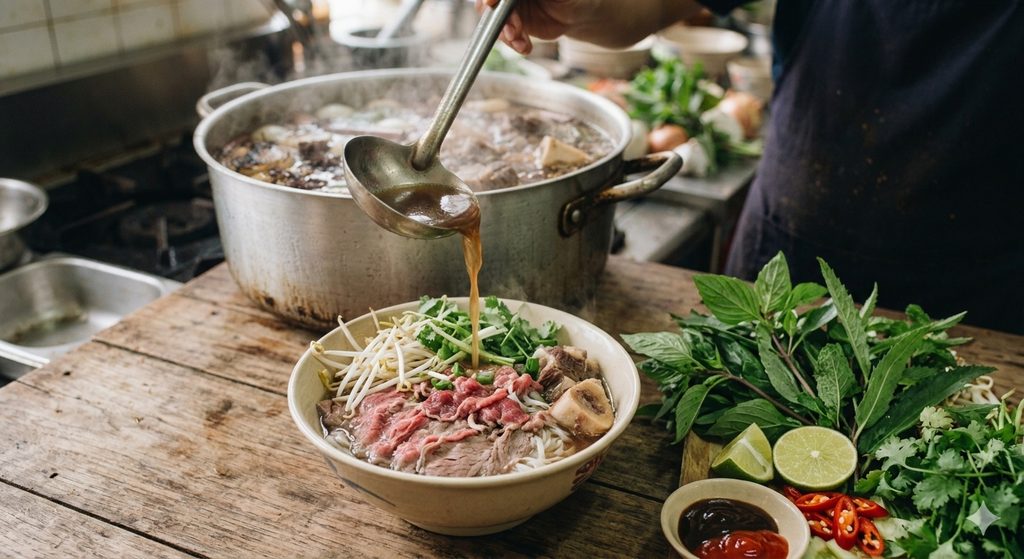
Traditional pho bò offers two proteins: tái (rare sliced beef) and chín (well-done brisket). Freeze your sirloin or eye of round forty minutes before slicing paper-thin against the grain. The hot broth cooks it instantly in the bowl. Brisket simmers in the broth for two hours until tender, then rests before slicing. No meatballs. No tendon. No tripe — unless you’re in the north, where phở bò viên includes beef balls. Know your region.
Regional Differences That Matter
Northern Pho (Hanoi Style)
Clearer broth. Less sweet. More MSG (yes, MSG — it’s essential for that savory depth). Wider noodles. Minimal herbs — just scallions, cilantro, maybe Thai basil. Lime and chili sauce on the side. The focus is broth purity.
Southern Pho (Saigon Style)
Sweeter broth. More spices. Bean sprouts, Thai basil, culantro (ngò gai), rice paddy herb (ngò ôm) served in a mountain on the side. Hoisin and sriracha for dipping meat. Narrower noodles. It’s a salad in a bowl.
I lean northern for the broth, southern for the herb plate. My kitchen, my rules.
Essential Equipment You Actually Need
- 12-quart stockpot minimum — anything smaller crowds the bones
- Cheesecloth or spice bag — fishing out whole spices is misery
- Fine mesh strainer — lined with cheesecloth for final clarity
- Sharp slicing knife — paper-thin beef requires precision
- Large serving bowls — pho needs room for noodles, meat, broth, herbs
- Chopsticks and soup spoons — the two-handed eating technique matters
Skip the specialized pho strainer baskets. A spider skimmer works fine. Don’t buy a noodle blanching basket unless you’re making this weekly.
Step-by-Step: Authentic Vietnamese Pho at Home
Day Before: Broth Foundation
- Rinse 4 lbs mixed beef bones (knuckle, femur, oxtail) under cold water
- Blanch in boiling water 10 minutes, drain, rinse bones and pot thoroughly
- Return bones to pot, add 6 quarts cold water, bring to gentle simmer
- Skim foam every 15 minutes for first hour
- Char 2 onions and 4-inch ginger piece until blackened, add to pot
- Toast spices dry in pan 2 minutes until fragrant: 6 star anise, 1 cinnamon stick, 1 tsp coriander seeds, 1 tsp fennel seeds, 6 cloves, 3 cardamom pods
- Bundle spices in cheesecloth, add to pot
- Simmer 12-18 hours, maintaining bare bubble, skimming occasionally
- Season: 1/4 cup fish sauce, 2 tbsp rock sugar, 1 tbsp salt — adjust to taste
- Strain, chill overnight, skim solidified fat
Day Of: Assembly
- Reheat broth to rolling simmer
- Slice 1 lb frozen sirloin paper-thin against grain
- Slice cooked brisket (simmered 2 hours in broth, rested)
- Blanch fresh noodles 10 seconds per portion, drain vigorously
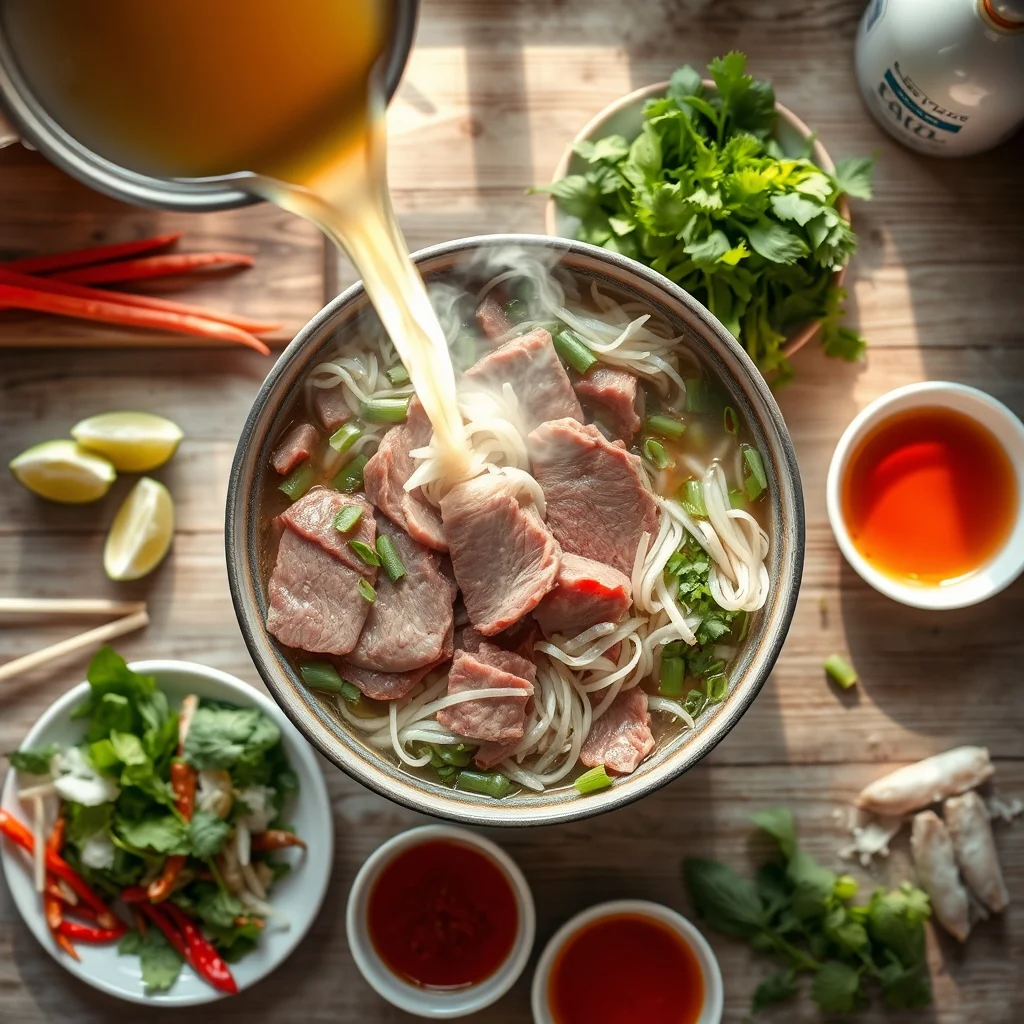
- Place noodles in bowl, top with raw beef slices, brisket, scallions
- Ladle boiling broth over — it cooks the raw beef instantly
- Serve immediately with herb plate, lime, chili, bean sprouts
Common Mistakes That Ruin the Bowl
Boiling Instead of Simmering
A rolling boil emulsifies fat into the broth, turning it cloudy and greasy. You want a lazy bubble — one or two breaking the surface per second. If your stove runs hot, use a flame tamer or simmer plate.
Over-Toasting Spices
Burnt star anise tastes like licorice charcoal. Two minutes in a dry pan over medium heat. Smell them. When fragrant, pull them. They’ll continue toasting in the broth.
Skipping the Overnight Chill
Hot fat carries flavor compounds that taste harsh. Chilling lets you remove it cleanly. The broth also melds overnight. Day-two broth is always better.
Pre-Cooking Noodles
Noodles sitting in broth turn to mush. Blanch per portion. Drain hard. Into bowl. Broth immediately. Eat fast.
Pro Tips from Three Generations
- Add a dried squid (one small piece) to the broth last hour — umami bomb my grandfather swore by
- Rock sugar, not white — it rounds the edges without cloying sweetness
- Fish sauce finish — add 2 tbsp at the very end, not during simmer. Heat kills its top notes.
- Freeze broth in quart containers — one batch feeds you for months
- Toast rice noodles — quick char in dry wok adds nutty depth (southern trick)
- MSG is not optional — 1 tsp per pot. Call it “flavor enhancer” if it helps you sleep.
Key Takeaways
- Authentic Vietnamese pho requires 12-18 hour broth — no shortcuts exist
- Fresh bánh phở noodles are non-negotiable for proper texture
- Northern and southern styles differ in sweetness, herbs, and noodle width
- Blanch bones, skim relentlessly, chill overnight for clarity
- Raw beef cooks in the bowl — slice frozen, serve immediately
- Herb plate is personal — provide options, let diners customize
Frequently Asked Questions
Can I make authentic Vietnamese pho in a pressure cooker?
You can make decent broth in 2.5 hours under pressure, but you lose the gentle extraction that develops complexity. The collagen renders too fast. Use it for weeknight emergencies, not when you want the real thing.
What’s the best beef cut for rare slices?
Sirloin or eye of round — lean, uniform, slices clean when semi-frozen. Ribeye is too fatty. Flank is too fibrous. Ask your butcher to slice it if your knife skills aren’t there yet.
Why is my broth cloudy?
Rolling boil, insufficient blanching, or skipping the overnight fat skim. Cloudy broth still tastes good — it just isn’t pho broth.
Can I use chicken instead of beef?
That’s phở gà — a different dish entirely. Chicken broth simmers 3-4 hours. Use whole chicken, charred aromatics, same spice bundle. Delicious, but not pho bò.
How do I store leftover pho?
Separate everything. Broth refrigerates 5 days, freezes 3 months. Noodles toss with oil, refrigerate 2 days. Raw beef — cook or freeze. Herbs in water with plastic bag tent. Reheat broth boiling, assemble fresh.
The first time you nail this — when a Vietnamese friend takes a sip, pauses, and says “Đúng rồi. This tastes like home” — you’ll understand why the eighteen hours mattered. Every bowl after is just practice.