
A Simple Recipe for Portuguese Custard Tarts

The first time I pulled a tray of blistered, caramelized Portuguese custard tarts from my oven, I understood why people queue for hours in Belém. The contrast between the shatteringly crisp puff pastry and the silky, barely-set custard is something you simply cannot buy in a supermarket box. If you’ve ever wanted to recreate that magic at home without a culinary degree, you’re in the right place.
This Portuguese Custard Tarts recipe strips away the intimidation. We’re talking about a streamlined process that respects tradition but fits a Tuesday night schedule. You’ll learn exactly how to handle the pastry, temper the custard so it doesn’t scramble, and hit that signature leopard-spotted top. No fancy equipment, no obscure ingredients—just technique that works.
Why This Portuguese Custard Tarts Recipe Works
Most home cooks struggle with two things: soggy bottoms and rubbery custard. This method tackles both head-on. We use a high-heat blast to create steam instantly, puffing the pastry layers before the butter melts out. Simultaneously, the custard cooks fast enough to set but slow enough to stay velvety. The cornstarch acts as insurance against curdling, while the lemon zest cuts the richness without announcing itself.
Another game-changer? The pastry log technique. Rolling the dough into a tight spiral, chilling it firm, then slicing rounds creates those distinct, flaky layers you see in Lisbon. It’s faster than laminating from scratch and more reliable than store-bought sheets thawed too long.
Ingredients You’ll Need
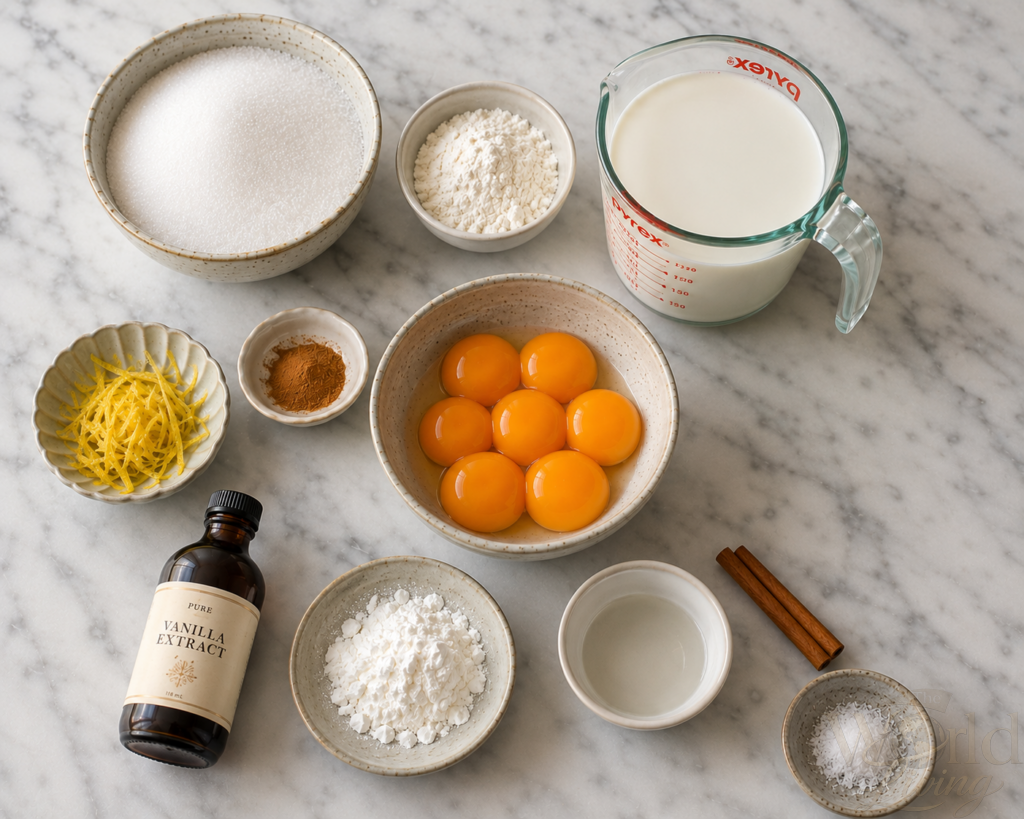
Quality matters more than quantity here. Six egg yolks, one cup of cream, a stick of butter—these flavors stand naked. Splurge on the good stuff.
For the Puff Pastry
- 1 sheet (half a 17.3 oz package) all-butter puff pastry, thawed overnight in the fridge
- Flour for dusting
For the Custard
- 1 cup (240ml) heavy cream, 36% fat minimum
- 1/2 cup (100g) granulated sugar
- 2 tablespoons (15g) cornstarch
- 1/4 teaspoon fine sea salt
- 1 strip lemon zest, 3-inch by 1-inch, peeled with a vegetable peeler (avoid white pith)
- 1 cinnamon stick, 3-inch
- 6 large egg yolks, room temperature
- 1 teaspoon vanilla extract
- Ground cinnamon for dusting
- Powdered sugar for dusting (optional)
Step-by-Step Instructions
Read through once before starting. The custard needs cooling time, and the pastry needs chilling. Sequence matters.
Preparing the Pastry Shells
- Lightly flour your work surface. Unfold the puff pastry sheet. If it’s cracked at the folds, gently press the seams together.
- Starting from the long side, roll the pastry into a tight log, like a jelly roll. Don’t stretch—just roll.
- Wrap the log in plastic wrap. Freeze 20 minutes or refrigerate 1 hour until very firm. This step is non-negotiable for clean slices.
- Preheat your oven to 500°F (260°C) with a rack in the upper third. If you have a baking steel or stone, put it in now. Place a 12-cup muffin tin on a rimmed baking sheet.
- Remove the log from the freezer. Using a sharp knife, cut into 12 even rounds, about 3/4-inch thick.
- Place one round in each muffin cup, cut side up. Dip your thumbs in cold water, then press the pastry into the cups, working from the center outward to create a thin, even shell that reaches just above the rim. Chill the tin while you make the custard.
Making the Custard
- In a medium saucepan, combine cream, sugar, cornstarch, salt, lemon zest, and cinnamon stick. Whisk until cornstarch dissolves.
- Heat over medium, stirring constantly with a silicone spatula, until the mixture thickens enough to coat the back of the spatula and bubbles gently, 4-6 minutes. Do not boil hard.
- Remove from heat. Fish out the lemon zest and cinnamon stick.
- In a heatproof bowl, whisk egg yolks and vanilla until pale.
- Temper the yolks: ladle about 1/2 cup hot cream into the yolks, whisking constantly. Repeat with another 1/2 cup.
- Pour the warmed yolk mixture back into the saucepan. Cook over low heat, whisking nonstop, until the custard thickens to a pudding consistency, 1-2 minutes. It should hold a trail from the whisk for a second.
- Immediately strain through a fine-mesh sieve into a clean bowl. Press plastic wrap directly onto the surface. Cool to room temperature, then refrigerate at least 30 minutes or up to 4 hours.
Baking to Perfection
- Give the chilled custard a quick whisk to loosen. Spoon or pipe into the pastry shells, filling 3/4 full. They’ll puff slightly.
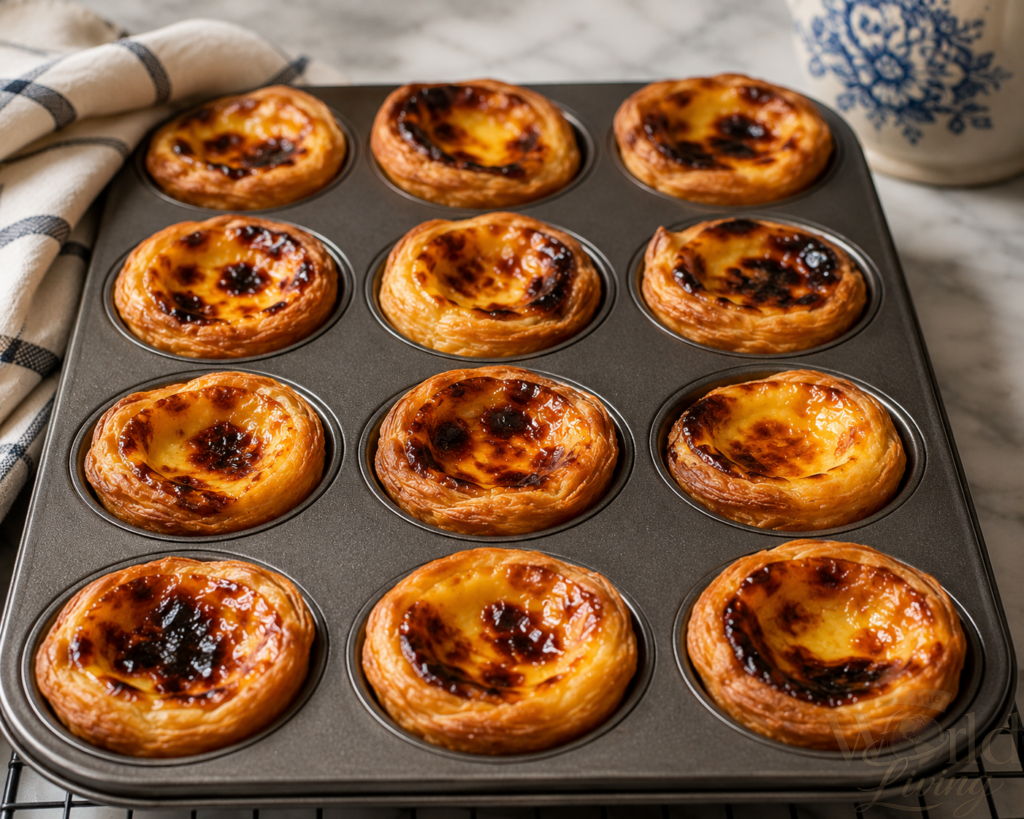
- Bake 12-15 minutes, rotating the pan halfway, until the pastry is deep golden and the custard tops are blistered with dark brown spots. If your oven runs cool, add 2 minutes.
- Let cool in the tin 5 minutes. Run a thin offset spatula around the edges to release. Transfer to a wire rack.
- Serve warm, dusted with cinnamon and powdered sugar if desired. They’re best eaten the same day.
Tips for the Best Portuguese Custard Tarts
- Use all-butter puff pastry. Margarine-based versions don’t laminate the same way. Check the ingredient list.
- Don’t skip the freeze. A firm log slices cleanly; a soft one squishes.
- Water on thumbs. It prevents sticking and helps the pastry climb the tin walls without tearing.
- Strain the custard. It catches any cooked egg bits and zest fibers for that silk texture.
- Oven thermometer. 500°F means 500°F. Most home ovens lie.
Common Mistakes to Avoid
Overfilling the cups causes custard to overflow and fuse the pastry to the tin. Three-quarters full is the sweet spot. Underbaking is the other big one—pale tops mean wet pastry. You want aggressive color. If the edges burn before the tops spot, tent the pan loosely with foil for the last 3 minutes. And please, don’t make the custard ahead without the plastic wrap contact. A skin forms in minutes and won’t dissolve.
Serving and Storing
Portuguese Custard Tarts are a morning pastry in Portugal, eaten warm with a bica (espresso). They hold at room temperature for about 4 hours. Refrigeration makes the pastry soggy. If you must store them, keep in an airtight container at room temp and reheat 5 minutes at 350°F to revive crispness. They don’t freeze well baked—the custard weeps. You can freeze the raw pastry shells in the tin for up to a month, then fill and bake fresh.
FAQ
Can I make Portuguese Custard Tarts with phyllo dough?
No. Phyllo creates a different texture—crispy shards instead of flaky layers. It’s delicious but not Pastéis de Nata. Stick with puff pastry.
Why did my custard curdle?
Heat was too high or you stopped whisking during tempering. The cornstarch helps, but low heat and constant motion are your real insurance.
Can I use milk instead of cream?
You’ll get a lighter tart, but it won’t have that signature richness. Half-and-half works in a pinch; whole milk produces a watery result.
How do I get the tops more caramelized?
Broil for the last 30-60 seconds. Watch like a hawk. The sugar on top burns fast.
Is this the authentic Pastéis de Belém recipe?
That recipe is a guarded secret. This is a highly tested, accessible version that gets you 95% there without a wood-fired oven or generations of muscle memory.
Pro Tips from a Pastry Chef
- Make the custard the night before. The flavor deepens, and morning assembly takes 10 minutes.
- Use a piping bag for filling. It’s faster and cleaner than spooning.
- If your muffin tin is dark nonstick, drop the oven to 475°F. Dark metal conducts heat faster.
- Sprinkle a few drops of water on the custard tops before baking. The steam helps create those distinct blisters.
- Serve on a warm plate. Cold ceramic shocks the pastry into softness.
Key Takeaways
- Freeze the pastry log before slicing for clean, high-rising shells.
- Temper yolks slowly and strain the custard for silky texture.
- Bake at maximum heat (500°F) for the signature leopard spots.
- Eat warm the same day—these don’t keep.
- All-butter puff pastry and high-fat cream are worth the extra cost.
There’s a reason Portuguese Custard Tarts have obsessed bakers for centuries. That moment when you crack through the caramelized crown into cool, quivering custard? Worth every minute at the stove. Make a batch this weekend. Share them with someone who appreciates the difference between good and unforgettable. Then start planning your next batch—because one tray never lasts long enough.