18 Hungarian Dishes Beyond Goulash You Need to Try
Last October, I sat at a corner table in a Budapest market hall watching a local woman order lángos with sour cream and garlic, then chase it with a bowl of fresh cabbage soup. She didn’t photograph either dish. That moment shifted how I approach Hungarian food entirely.
Why Hungarian Dishes Beyond Goulash Deserve Your Attention
Most visitors arrive knowing goulash, maybe chicken paprikash. They leave having missed the daily staples that define actual Hungarian eating. The country’s culinary identity runs deeper than the tourist-menu classics, shaped by Ottoman occupation, Austro-Hungarian refinement, and peasant ingenuity stretched across the Great Plain.
Hungarian dishes beyond goulash reveal a cuisine built on preservation, seasonal intensity, and a pantry where paprika isn’t just a spice — it’s infrastructure. Sweet, hot, smoked, rózsa (rose), különleges (special grade): each serves a distinct purpose. Understanding this changes what you order.
Street Food That Locals Actually Eat
Lángos: The Market Hall Standard
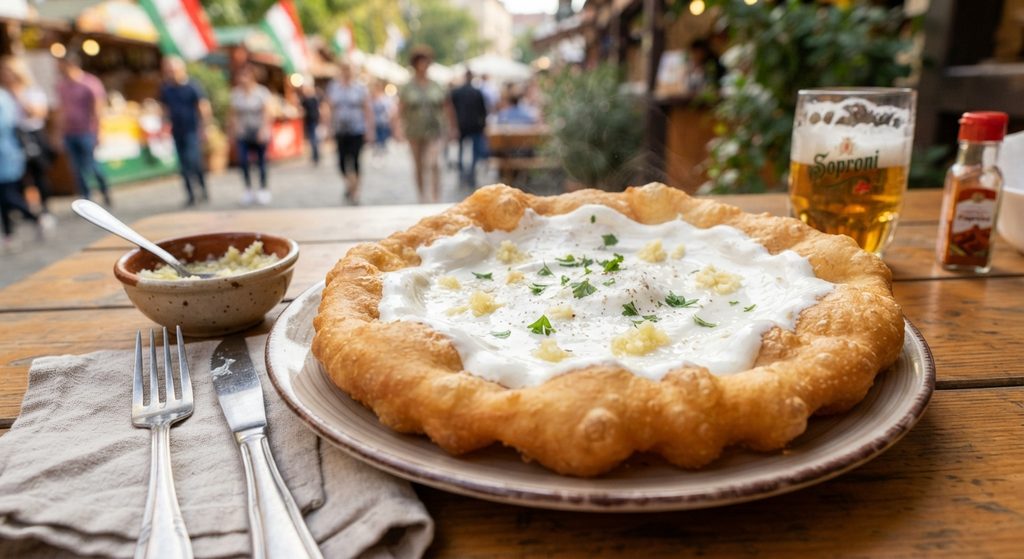
Fried dough sounds universal. Lángos isn’t. The proper version emerges from oil at around 180°C with a blistered, chewy interior and crisp edges. Toppings matter: tejföl (thick sour cream), grated cheese, garlic water brushed on hot. Skip the ketchup-mayo combo — that’s for tourists at 2 AM.
Best starting point: the Great Market Hall (Nagyvásárcsarnok), upper gallery, where several stalls fry to order — arrive before 11 AM and follow whichever line of locals is longest rather than chasing a specific stall number, since vendor turnover there is real and a single named stall can change hands or close without much notice.
Kürtőskalács: Chimney Cake Done Right
You’ll see these rotating over coals in every tourist zone. Most are dry, pre-made, reheated. The real thing: dough wrapped on a wooden spit, rolled in sugar that caramelizes into a crackling shell, steam rising when you tear it open. Cinnamon, walnut, cocoa — choose one, not three. Worth knowing: the dessert actually originated in Transylvania (historically Hungarian, now part of Romania) before becoming a staple of Budapest’s street food scene — it’s a borrowed classic rather than a Budapest native.
Seek out vendors making them to order. The steam test never lies.
Soups That Anchor Every Hungarian Meal
Újkáposzta Leves: Fresh Cabbage Soup
Not the fermented version (that’s korhelyleves, hangover soup, made from sauerkraut). Újkáposzta leves — literally “new cabbage soup” — uses sweet autumn cabbage, simmered with smoked pork hock, caraway, and a whisper of paprika. Served with a dollop of tejföl and fresh bread. It’s autumn in a bowl — clean, porky, slightly sweet.
Jókai Bableves: The Writer’s Bean Soup
Named for novelist Mór Jókai, who supposedly demanded it daily. White beans, smoked pork knuckle, carrots, parsley root, and a separate plate of csipetke (pinched noodles) added at the table. The smoke penetrates everything. It’s a meal, not a starter.
Palócleves: Green Bean & Lamb Soup
From the Palóc region near the Slovak border — also associated with Budapest’s Gundel restaurant, which has its own claimed version billed as “like goulash, yet not goulash.” Lamb, green beans, dill, sour cream tempered with hot broth. Bright, herbal, rich. The dill isn’t garnish — it’s structural. Skip it if you dislike dill; don’t ask for it removed.
Main Dishes: Paprika as Architecture
Pörkölt vs. Paprikás: The Distinction That Matters
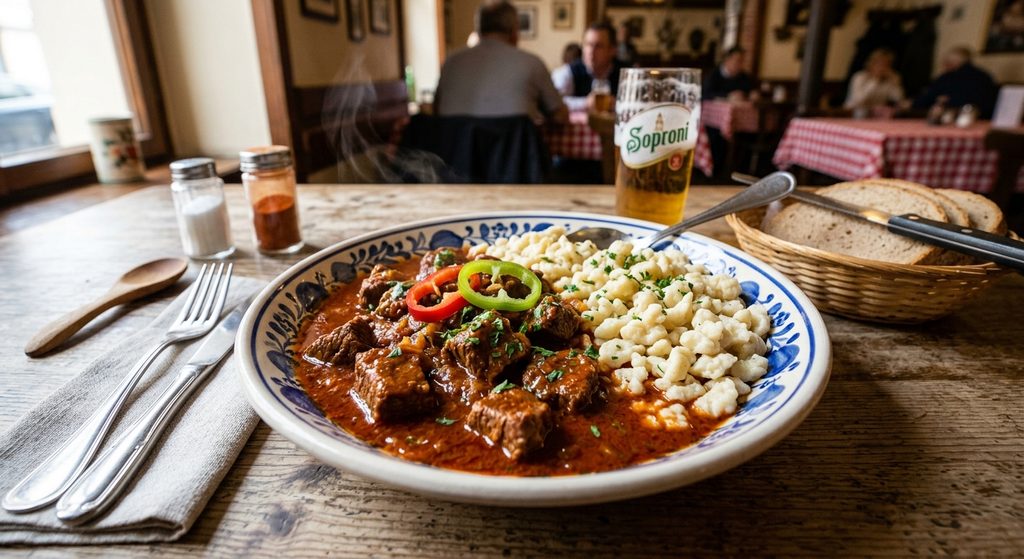
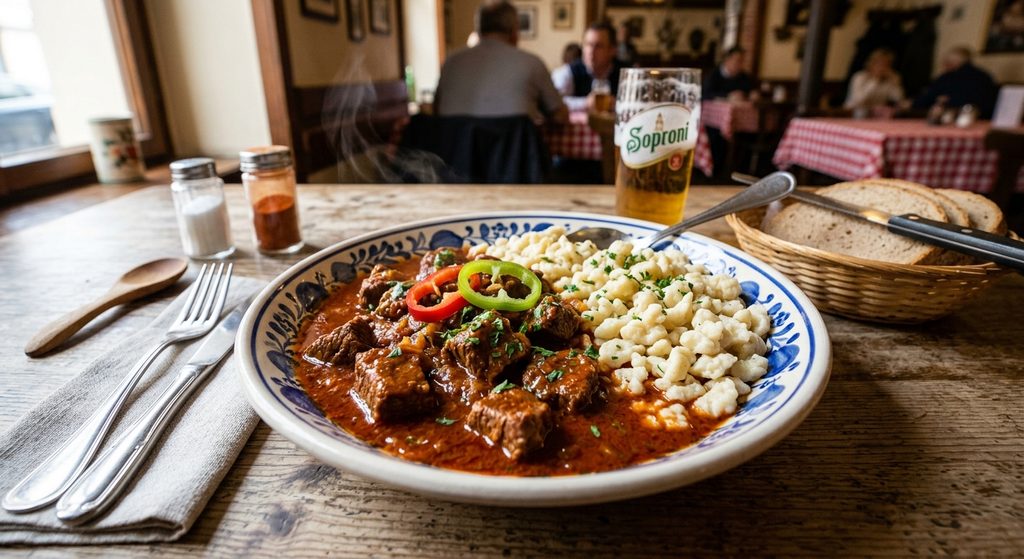
Menus blur them. They shouldn’t. Pörkölt: meat (beef, pork, lamb) braised with onions, paprika, zero liquid beyond what the onions release. Thick, clinging sauce. Paprikás: same base, finished with tejföl and flour, creating a lighter, tangy gravy. Both served with nokedli (dumplings) or galuska (larger noodles).
Order pörkölt for depth. Paprikás when you want brightness cutting richness.
Hortobágyi Palacsinta: Savory Crepes That Aren’t Dessert
Crepes stuffed with veal (traditionally) or chicken pörkölt, rolled, baked in paprika-tejföl sauce. Named for the Hortobágy plains. The sauce seeps into the crepe edges. Eat with a spoon and fork. The sweet paprika dust on top isn’t decoration — it’s the final flavor layer.
Töltött Káposzta: Stuffed Cabbage Worth the Wait
Whole cabbage leaves wrapped around rice and pork, seasoned with paprika, simmered for hours in a tomato-sauerkraut broth. Served with tejföl and bread for the sauce. A Christmas staple, but it appears on Sunday tables year-round. The best versions use leaves from the previous autumn’s harvest, frozen whole.
Offal & Preservation: The Peasant Pantry
Disznótörés Products: Beyond the Slaughter
Winter pig slaughter (disznótörés) produced a year’s protein. The results appear on menus as: hurka (blood or liver sausage, rice-stuffed), kolbász (paprika-heavy sausage, smoked or fresh), szalonna (cured pork fat, eaten raw on bread with onions), and téliszalámi (winter salami, noble mold included).
Order a disznótörés tasting board at a village csárda. The fat isn’t waste — it’s flavor delivery.
Pacal Pörkölt: Tripe for the Converted
Honeycomb tripe, long-braised with onions, paprika, and garlic, served with boiled potatoes. Texture: tender, not rubbery. The sauce clings. It’s what grandmothers make when someone’s sick. Don’t knock it until you’ve tried a proper version at Kádár Étkezde in Budapest’s District VIII, a decades-old neighborhood institution well known for exactly this kind of home-style cooking.
Lake & River Fish: The Forgotten Protein
Halászlé: Fisherman’s Soup, Two Ways
Baja style: carp, catfish, onions, paprika, pasta squares (tészta), traditionally cooked in a kettle over an open fire. Szeged style: strained broth, more paprika, no pasta, served with bread. Both use river fish heads for collagen. The Baja version is a full meal; the Szeged version functions more as a starter.
Eat at a riverside halászcsárda on the Tisza or Danube where it’s still made the traditional way. The smoke from the fire enters the broth.
Fogas: Pike-Perch, The Noble Catch
Firm white flesh, minimal bones. Grilled whole with dill, garlic, and lemon — or finished paprikás-style in tejföl sauce. Best in late spring from Lake Balaton, where “fogas” is specifically the local name for Balaton’s pike-perch. Ask for “fogas sütve” (roasted) at Balatonfüred’s harbor restaurants.
Vegetable Mains: Not Side Dishes
Lecsó: The Summer Trinity
Tomatoes, wax peppers, onions. Cooked down until the oil separates. Eggs scrambled in at the end (lecsó tojással) or sausage slices added (lecsó kolbászos). Bread is mandatory for the sauce. August tomatoes make or break it. Winter versions use jarred tomatoes — acceptable, but noticeably different.
Rakott Krumpli: Layered Potato Casserole
Sliced potatoes, boiled eggs, kolbász, and tejföl, baked until golden. A peasant gratin. The sausage fat renders into the potatoes, the eggs go creamy. It’s carb-on-carb that somehow feels light. The vegetarian version swaps sausage for mushrooms — surprisingly good.
Desserts That Aren’t Dobos Torte
Somlói Galuska: The Tipsy Trifle
Sponge cake, walnut, chocolate sauce, rum, whipped cream, raisins, soaked and chilled overnight. The rum isn’t subtle. It was conceived in the late 1950s by Károly Gollerits, longtime head waiter at Budapest’s Gundel restaurant, and brought to life by pastry chef József Béla Szőcs — the two debuted it at the 1958 Brussels World’s Fair, where a misspelling of its original name, “somlyói” (after Somlyó Hill near Fót, where Szőcs grew up), turned it into “somlói” for good. Every family has their own version today. The best use day-old cake — fresh sponge absorbs unevenly.
Túrós Csusza: Curd Cheese Noodles
Wide egg noodles, túró (curd cheese, drier than ricotta), tejföl, and crispy szalonna bits. Served sweet or savory. The sweet version adds sugar, sometimes raisins. The contrast — salty pork, tangy cheese, sweet noodle — sounds wrong. It works perfectly.
Rétes: Strudel, Savory Included
Paper-thin dough stretched by hand over a tablecloth. Fillings: apple-walnut, poppy seed, túró-raisin, but also cabbage, potato, and spinach-feta. The savory versions show up most often at village festivals. Watch a rétesné (strudel woman) stretch the dough — it’s a skill that reads the room like a pro.
Wine & Spirits: What to Pour With What
Tokaj Beyond Sweet
Dry (száraz) Furmint pairs well with fish soups, lecsó, and goat cheese. Hárslevelű handles paprikás nicely. Late harvest (késői szüret) cuts through foie gras or túrós desserts. Aszú (the botrytized, classically sweet style) wants blue cheese or dark chocolate — not more sugar on top of it.
Bull’s Blood (Egri Bikavér): The Red Blend
A Kékfrankos-based blend, medium-bodied and acid-driven. It matches pörkölt, grilled sausages, and hard cheeses well, and tends to struggle against delicate fish. As with any wine recommendation, treat specific vintage advice as perishable — ask the restaurant or shop which current vintage is drinking well rather than relying on a fixed year, since that changes every season.
Pálinka: Fruit Brandies With Rules
Apricot (barack), plum (szilva), pear (körte), sour cherry (cseresznye). Sip at room temperature from a tulip glass. Never shoot it, never chill it, never mix it. A 50% ABV pálinka after töltött káposzta resets the palate. Zwack — Hungary’s best-known spirits house, more famous internationally for its bitter herbal liqueur Unicum — also produces genuine, well-regarded pálinka; for a different angle, small-batch village distillers and brands like Agárdi are worth seeking out too.
Seasonal Eating Calendar
- Spring (March–May): Wild garlic (medvehagyma) pesto, asparagus (spárga) soups, lamb, new potatoes with dill.
- Summer (June–August): Lecsó, cold fruit soups (meggyleves — sour cherry), grilled fish, tomatoes eaten like apples.
- Autumn (September–November): Mushroom dishes (gomba paprikás), game (vadászlé — hunter’s soup), pumpkin (tök) everything, new wine (újbor).
- Winter (December–February): Disznótörés products, töltött káposzta, korhelyleves, roasted chestnuts, mulled wine (forralt bor) at Christmas markets.
Regional Specialties Worth Detouring For
Szeged: Paprika Capital
Szegedi paprika carries protected designation of origin (PDO) status and flavors everything here. Try halászlé at a riverside halászcsárda, then visit the Paprika Museum. Buy ground paprika in metal tins rather than clear jars — light degrades it.
Hortobágy: Plains Cuisine
Slambuc (bacon-fat fried pasta with potatoes), and gulyásleves cooked in a bogrács (kettle) over an open fire by csikós (traditional Hungarian horsemen). The Hortobágyi Csárda serves both in a setting built around that same plains-herding tradition.
Balaton: Lake Culture
Fogas, catfish (harcsa) grilled with garlic butter, lángos from lakeside stalls, and badacsonyi wines grown on volcanic soils. The Tihany peninsula is known for its lavender, which shows up across local food and drink.
Villány: Red Wine Country
Cabernet Franc, Merlot, Portugieser. Pair with mangalica pork (a heritage breed, high in fat, intensely flavored) at a vineyard restaurant — the fat needs the tannins to cut through it.
Pro Tips for Eating Like a Local
- Lunch is the main meal. Many restaurants offer a menü (two-course fixed price) from 11 AM–2 PM. Best value, most authentic.
- Budapest’s famous cake shops — Gerbeaud, Ruszwurm, Művész — are technically cukrászdák (patisseries/cafés), not teázók (tea houses), even though they’re often described that way in English-language guides. Go for rétes or somlói galuska, not a proper tea service.
- Tap water is safe everywhere. Ask for “kranvíz” to avoid paying for bottled.
- Service charge isn’t standard everywhere, so check your bill. Where it isn’t included, a 10% tip for good service, left in cash directly with the server, is customary — card tips don’t always reach staff.
- Sunday closures are real. Outside Budapest, many family-run places close Sunday–Monday. Plan ahead.
- Paprika loses potency fast. Buy small tins, use within about six months. The red dust in your suitcase will taste flat by the time you get around to it months later.
Key Takeaways
- Hungarian cuisine centers on paprika grades, pork preservation, and seasonal vegetables — not just goulash.
- Soup starts every traditional meal; learn the difference between pörkölt and paprikás.
- Market halls (vásárcsarnok) offer some of the most authentic street food at local prices, though chasing one specific named stall is less reliable than following where the local crowd is.
- Regional specialties vary dramatically: lake fish, plains kettle-cooking, mountain mushrooms.
- Wine regions produce world-class dry whites and structured reds well beyond sweet Tokaji.
- Pálinka is a digestif, not a shot — sip it respectfully.
- Lunch menüs deliver the best quality-to-price ratio for travelers.
Frequently Asked Questions
What is the most popular Hungarian dish besides goulash?
Chicken paprikás (csirke paprikás) with nokedli is the most widely recognized internationally, but locals eat lángos, pörkölt, and töltött káposzta far more frequently in daily life.
Is Hungarian food spicy?
Not chili-spicy in the way many visitors expect. Paprika provides warmth and depth, not heat. Hot paprika (erős) exists and is used in some dishes, but sparingly. Ask for “nem erős” if you want to avoid heat entirely.
What Hungarian dishes beyond goulash are vegetarian-friendly?
Lecsó (without sausage), rakott krumpli (mushroom version), túrós csusza (skip the szalonna), vegetable rétes, cold fruit soups, and most salads. Many places now offer vegetarian pörkölt made with mushrooms or seitan.
Where can I find authentic Hungarian food in Budapest?
Avoid the Váci utca tourist strip. Try Kádár Étkezde (District VIII) for old-school home cooking, Rosenstein for Jewish-Hungarian dishes, Kiosk Budapest for modern takes on classics, or the Great Market Hall’s upper level for a casual, affordable meal.
What’s the difference between Hungarian and Transylvanian cuisine?
What’s the difference between Hungarian and Transylvanian cuisine? Transylvanian (Erdélyi) food, from the historically Hungarian region now part of Romania, uses more smoked meats, cornmeal (puliszka), and distinct herbs like lovage (lestyán). Dishes like erdélyi káposzta (made with smoked pork and cornmeal) differ noticeably from their Hungarian-proper counterparts — and, as with kürtőskalács, several “classic Hungarian” foods actually trace back to this Transylvanian tradition.
Hungarian food rewards curiosity. The next time you’re staring at a menu, skip the goulash. Order the pörkölt. Ask for the daily soup. Watch what the table next to you receives. That’s where the real eating happens — in the steam rising from a bowl of fresh cabbage soup on a Tuesday in November, in the crunch of lángos eaten standing at a market counter, in the last spoonful of somlói galuska soaked through with rum and chocolate. Hungarian dishes beyond goulash aren’t alternatives. They’re the main event.