
A Complete Packing Guide for Traveling With a Baby
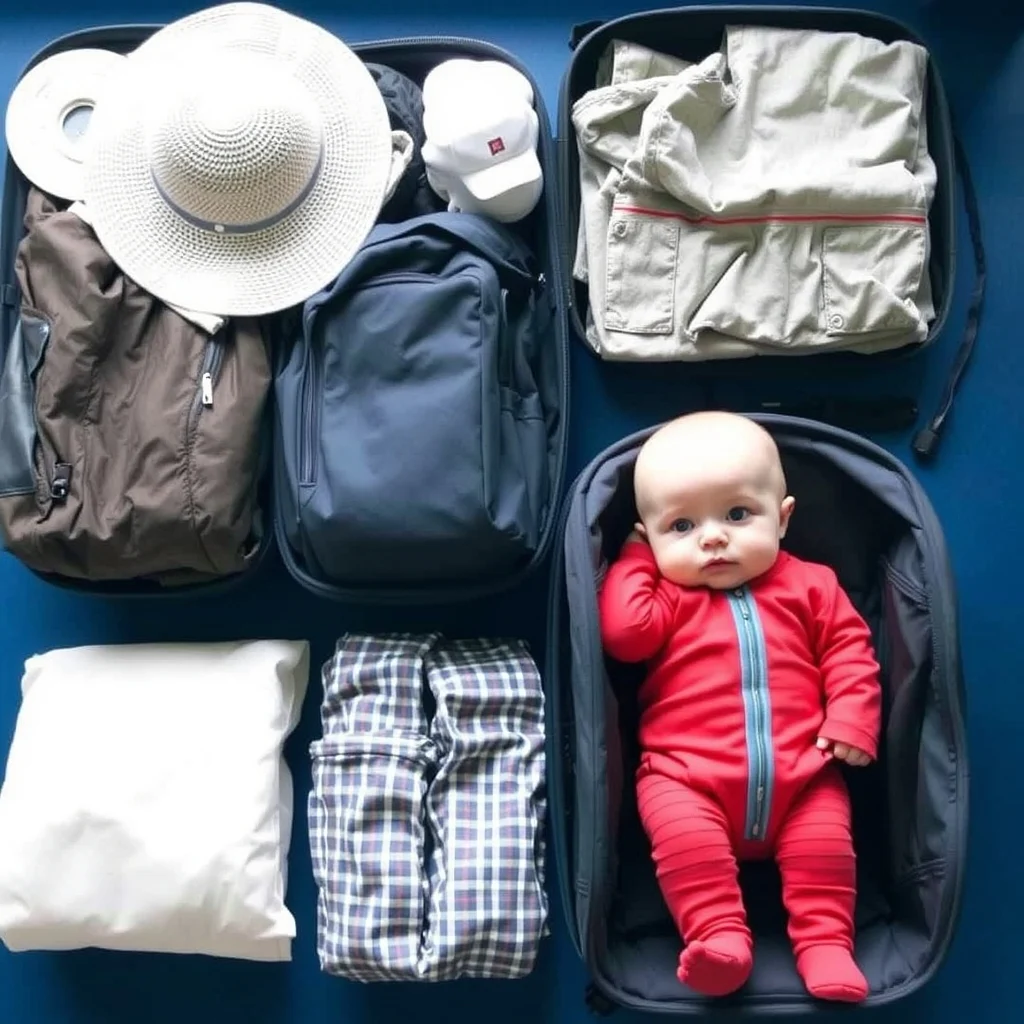
Last month, I boarded a flight to visit my sister with my 8-month-old daughter, only to realize halfway through security that I’d packed three identical outfits and forgotten the Diaper Genie refills. That frantic scramble in the airport bathroom—using baby wipes as makeshift diaper pail liners—was the moment I knew I needed a better system. If you’re planning a family trip with a baby, this complete Packing Guide for Traveling With a Baby will save you from last-minute panic and ensure you’ve got everything you actually need, not just everything you think you might need.
Understanding Baby Travel Packing Essentials
Before you start throwing items into a suitcase, it’s crucial to understand what categories of items you’ll actually need. Babies don’t require as much as parents often fear—they just require the right things packed thoughtfully.
Clothing Calculations for Baby Travel
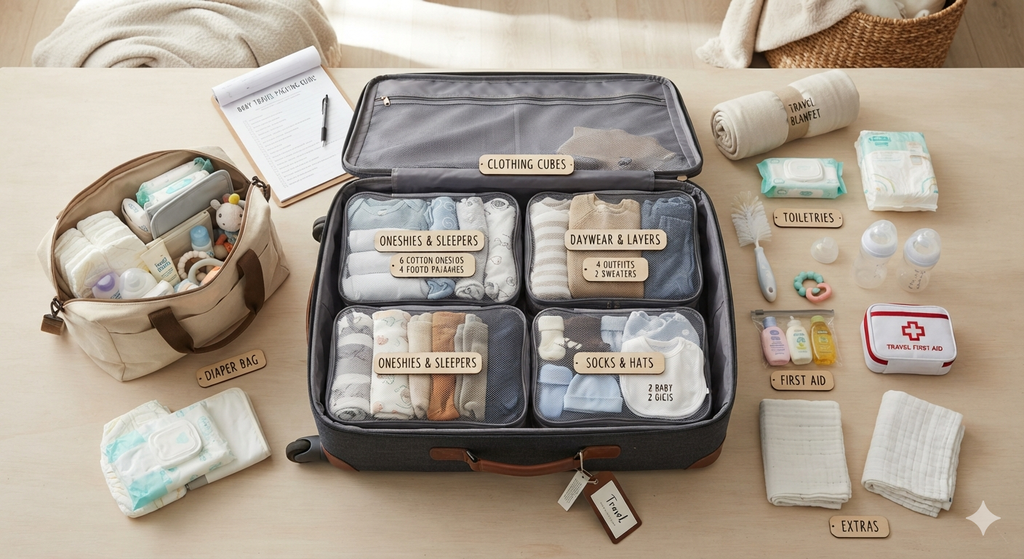
Here’s a simple rule: pack one outfit for each day you’re traveling, plus two extras. For a week-long trip, that’s nine complete sets. But don’t stop at just onesies. You’ll need:
- 2-3 sleepers or pajamas (babies can get chilled easily)
- 1-2 special occasion outfits (if visiting family or attending events)
- Season-appropriate outerwear (light jacket for flights, rain gear for outdoor adventures)
- 2-3 pairs of socks and 2 hats (sun hat for day, beanie for night)
Pro tip: Pack clothes that can be layered. A lightweight onesie under a fleece works for more temperatures than two separate outfits.
The Ultimate Baby Gear Checklist
While clothing gets most of the attention, gear is where travel plans fall apart. The key is choosing versatile, lightweight items that serve multiple purposes.
Stroller vs. Carrier: Making the Right Choice
For most trips under 4 days, a baby carrier is more practical than a stroller. Here’s why:
- Carriers fit in overhead compartments and are easier to navigate through airports
- You can use them on planes when seating is limited
- Babies often prefer being held during travel, making carriers more soothing
However, if you have a long car ride or plan to navigate uneven terrain, a lightweight umbrella stroller becomes essential. Look for models that fold compactly and have good wheel locks.
Must-Have Travel Items for Baby
These items deserve priority space in your luggage:
- Portable crib or bedding (check if accommodations provide these first)
- Baby monitor (many hotels have poor soundproofing)
- White noise machine or app (airport and hotel sounds disrupt sleep)
- Thermometer (fever at 3am in a strange place is nightmare fuel)
- Baby carrier/wrap (versatile for airport navigation and sightseeing)
Feeding and Nutrition Travel Solutions
How you handle feeding depends entirely on whether your baby is breastfed, bottle-fed, or combination-fed. Each approach requires different preparations.
Breastfeeding Travel Essentials
If you’re breastfeeding, your body does most of the work. However, you’ll still need:
- A nursing cover or shawl for privacy in public spaces
- Nipple cream (travel can dry out skin faster)
- Comfortable nursing bras that convert to front-opening styles
- A small nursing pillow for rocking or feeding in hotels
Don’t forget to pack nipple sterilizers if you’re returning to breastfeeding after formula feeding or if your baby has had antibiotics.
Bottle-Feeding on the Road
Bottle-feeding requires more planning but offers flexibility. Here’s your packing strategy:
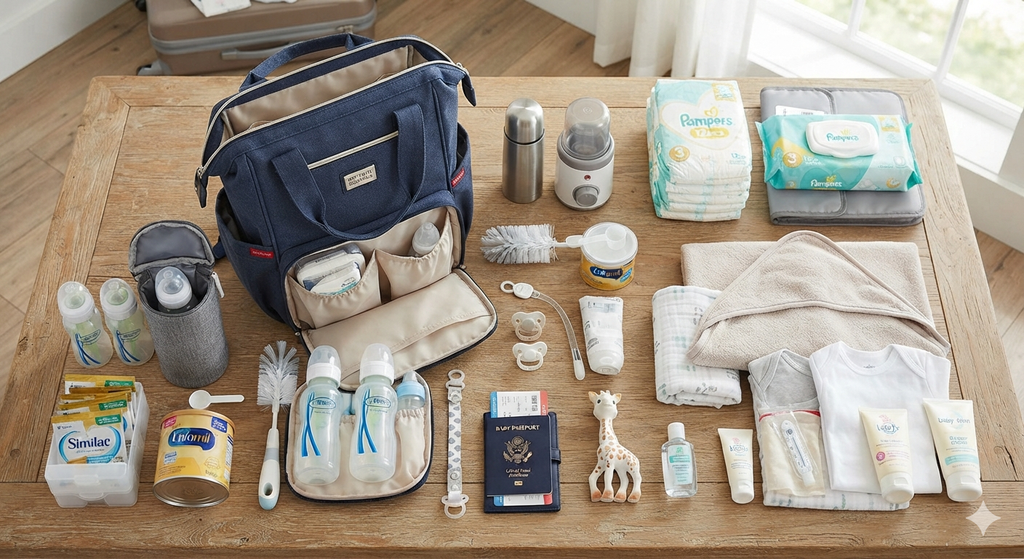
- Bring pre-measured formula in individual packets or small ziplock bags
- Pack a portable bottle sterilizer that works with hot water
- Carry multiple bottles in various sizes (some babies prefer smaller bottles for frequent feeding)
- Bring a bottle brush and dish soap that fits in your toiletry bag
Time-saving tip: Pre-fill bottles with water at home, then add formula powder at your destination. This saves weight and eliminates liquid restrictions.
Bathroom and Personal Care Items
Babies need regular cleaning, but hotel bathrooms often lack baby-friendly features. Plan accordingly.
Baby Bath Essentials
You don’t need a full bathtub—most babies can be bathed in a sink or portable travel tub:
- Travel bath tub that fits in sinks (collapsible silicone options work great)
- Baby shampoo and body wash in travel-sized bottles
- Soft washcloths (at least four—two for washing, two for drying)
- Handheld baby thermometer for checking bath water temperature
Changing Solutions
Hotels rarely have changing tables, and public restrooms can be problematic. Your kit should include:
- Portable changing pad that fits in your luggage
- Diaper disposal bags (not just wipes)
- Wet bag for soiled clothing
- Hand sanitizer (more reliable than soap in unfamiliar bathrooms)
Documentation and Safety Considerations
Traveling with a baby adds documentation complexity. Don’t risk legal issues or safety problems.
Essential Documents for Baby Travel
Even if you’re traveling domestically, carry these documents:
- Original birth certificate (photocopy in luggage, original with you)
- Passport for international travel (even infants need them)
- Notarized consent letter if traveling with only one parent
- Insurance information and pediatrician contact details
Safety Gear for Various Environments
Different destinations require different safety preparations:
- Window guards for hotel rooms with openable windows
- Door locks or additional safety gates for unfamiliar rooms
- Travel safety plugs for electrical outlets
- Non-slip mats for bathtubs and slippery surfaces
Packing Strategies That Actually Work
The difference between a stressful trip and a smooth journey often comes down to packing method. Here’s how to organize effectively.
Rolling vs. Folding: Baby Clothing Edition
Rolling clothes saves space and reduces wrinkles, but not all items work well with this method. Roll:
- Lightweight cotton onesies and sleepers
- Soft pants and leggings
- Towels and lightweight blankets
Folder these items instead:
- Denim or thick fabric items
- Anything with buttons or delicate closures
- Outerwear that might lose shape
Using Packing Cubes for Baby Travel
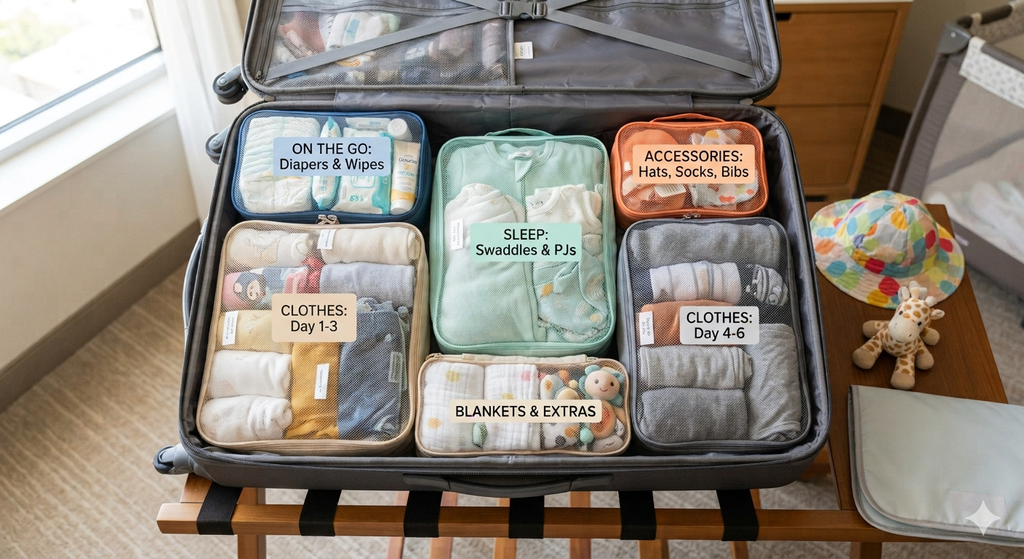
Packing cubes transform chaos into organization. Assign each cube to a category:
- One cube for daily outfits
- One for sleepwear and underwear
- One for special occasion items
- One for toiletries and small accessories
This system makes unpacking and repacking at your destination incredibly simple.
Managing Diapers and Waste Effectively
Diapers are heavy, bulky, and create waste management challenges. Smart planning reduces both stress and carry-on weight.
Diaper Quantity Calculations
A simple formula: multiply your baby’s age in months by 2, then add 12. For a 12-month-old, that’s 12 × 2 + 12 = 36 diapers per week. Add 10-15% extra for accidents.
However, consider these adjustments based on your destination:
- Rainy climates: waterproof bags become essential
- Remote locations: pack 2-3 extra days’ supply
Diaper Bag Organization System
Your diaper bag should function as a mobile nursery. Organize it with these sections:
- Top zippered compartment: wipes and diapers
- Front pockets: creams, hand sanitizer, small toys
- Bottom section: spare clothing and bibs
- Outside pockets: phone, wallet, and frequently used items
Entertainment and Comfort Items
Travel disrupts routines, so comfort items help babies (and parents) adjust more easily.
Soothing Devices for Baby Travel
These items can be lifesavers during flights and new environments:
- White noise app or portable sound machine
- Favorite security blanket or stuffed animal
- Portable fan for airflow (especially helpful on planes)
- Unbreakable baby teethers that fit in carry-on
Age-Appropriate Entertainment
Choose activities based on your baby’s developmental stage:
- 0-3 months: high-contrast black and white books, soft rattles
- 4-8 months: musical toys, interactive books
- 9-12 months: nesting toys, shape sorters
Important: Avoid screen time for babies under 18 months. Real-world interaction is always better than tablet entertainment.
Emergency Preparedness and Backup Plans
Things don’t always go as planned. Having backup options prevents minor issues from derailing your entire trip.
Medical Emergency Kit for Baby Travel
Beyond basic first aid, include these baby-specific items:
- Digital thermometer that works in multiple settings
- Infant pain relief medication (acetaminophen or ibuprofen)
- Oral syringe for medication administration
- Extra prescription medications if applicable
Backup Feeding Options
Always have alternatives ready:
- Formula samples from pediatrician or formula company
- Portable bottle warmer that works with hotel kettles
- Non-perishable snack options for older babies
- Emergency contact list for nearby pediatricians
Documentation Backup Strategy
Store copies of important documents in multiple locations:
- Digital photos saved to cloud storage
- Physical copies left with trusted person at home
- Photocopies kept separate from originals
Pro Tips from Experienced Baby Travelers
After traveling with hundreds of babies, here are the insights that consistently make trips smoother:
Timing Your Packing
Start packing 2-3 days before departure. This gives you time to:
- Check weather forecasts and adjust clothing
- Verify you have all necessary adapters and converters
- Replace any used items (wipes, batteries, etc.)
- Test that all gear works before leaving
Weight Distribution Strategies
Distribute weight evenly across your luggage:
- Heaviest items go in the middle of suitcases
- Fragile items packed between soft clothing
- Keep frequently accessed items in carry-on
- Consider shipping non-essential gear ahead to your destination
Final Hour Packing Checklist
The night before departure, review this quick checklist:
- ✓ All medications are packed and accessible
- ✓ Emergency contacts are written down
- ✓ Car seat is properly installed in vehicle
- ✓ All electronics are charged
Key Takeaways for Baby Travel Success
Traveling with a baby requires preparation, but it doesn’t have to be overwhelming. Focus on these essential principles:
- Pack fewer, higher-quality items that serve multiple purposes
- Organize systematically using categories and clear containers
- Plan for unexpected situations with backup options
- Adjust quantities based on destination and trip length
- Keep emergency supplies easily accessible
Remember, the goal isn’t perfection—it’s creating positive experiences for both you and your baby. With this complete packing guide, you’re equipped to handle whatever comes your way while maintaining your sanity and keeping your little one comfortable throughout your journey.
Whether you’re taking a weekend road trip or a cross-country adventure, the same principles apply. Start planning early, pack thoughtfully, and trust that you know what your baby needs better than any checklist ever could.