
Must-Try Dishes When Visiting Ethiopia

Most travelers arrive in Addis Ababa expecting coffee and history, but they leave talking about the communal trays of food that changed their perspective on dining. If you haven’t experienced the ritual of eating with your hands, you haven’t truly tasted Ethiopia. The culinary landscape here is unlike anything else in Africa, defined by shared platters, fermented sourdough, and spices that linger long after the meal is over.
Navigating a new menu can be intimidating, especially when the concept of silverware isn’t the norm. To be honest, the first time I sat down to a large platter of injera, I felt a bit lost. But once you understand the rhythm of the meal—the dipping, the tearing, the communal spirit—it becomes the highlight of your entire trip. This guide is designed to help you navigate the complex, delicious world of Ethiopian cuisine so you can eat like a local from day one.
Understanding the Foundation: What is Injera?
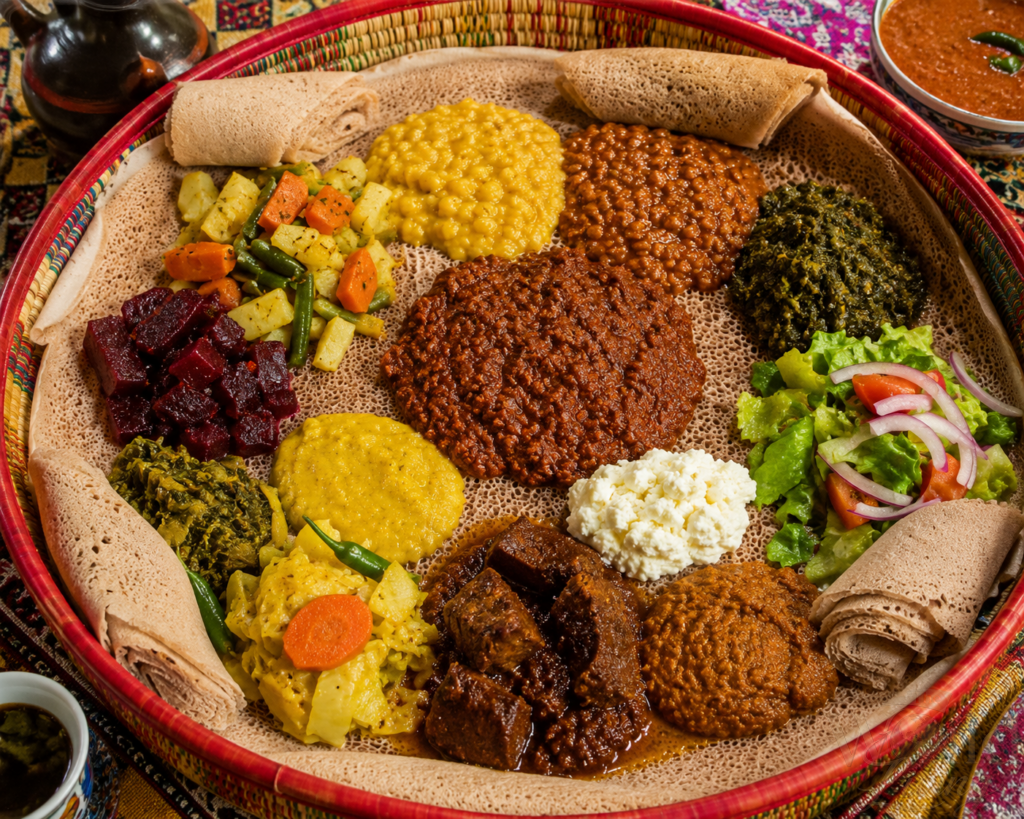
You cannot talk about Ethiopian food without starting with the base of every single meal: injera. Think of it as a large, spongy, fermented pancake made from teff, a tiny ancient grain that is naturally gluten-free. This isn’t just a side dish; it acts as your plate, your utensil, and your bread all at once.
The slightly sour taste of the injera is the result of a multi-day fermentation process. This tanginess is essential because it cuts through the richness of the heavy stews, known as wats, that sit atop it. When you eat, you tear off a small piece of the bread and use it to scoop up the meat or vegetables. It is a tactile, sensory experience that forces you to slow down and enjoy the flavors.
Must-Try Dishes When Visiting Ethiopia
Ethiopian cuisine is categorized into two main types of stews: wats (thick, spicy stews) and tsebhi (lighter, more sauce-based dishes). While many people associate Ethiopian food with meat, the vegetarian options are equally legendary due to the country’s religious fasting traditions.
The Iconic Doro Wat
If you only try one thing, make it Doro Wat. This is widely considered the national dish of Ethiopia. It is a rich, slow-cooked chicken stew made with a heavy amount of berbere spice, onions, and clarified butter (niter kibbeh). A proper Doro Wat always includes hard-boiled eggs, which soak up all that spicy, savory goodness. It is deep, complex, and definitely not for the faint of heart if you are sensitive to spice.
The Vegetarian Feast: Beyaynetu
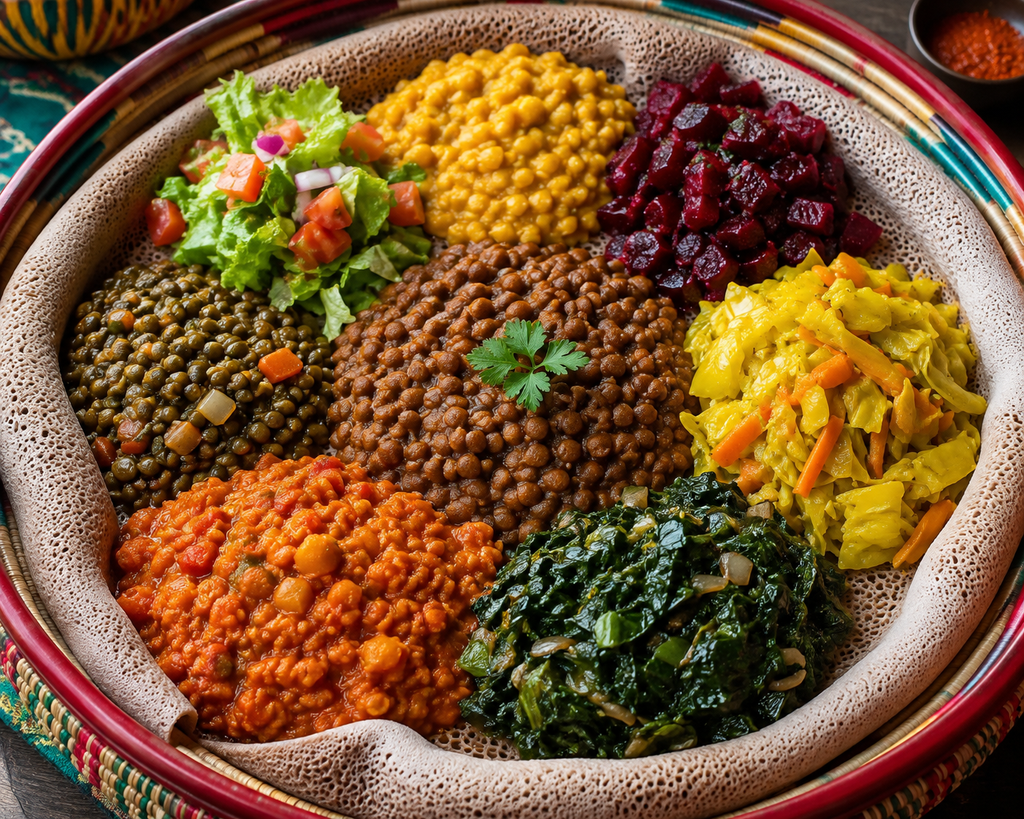
What most people don’t realize is that Ethiopia has some of the best vegan food in the world. During fasting seasons, many Ethiopians eat strictly plant-based diets. This has led to the creation of Beyaynetu, a beautiful, colorful platter filled with various lentil and vegetable stews. You’ll find misir wot (spicy red lentils), kik alicha (yellow split peas), and various cabbage and carrot mixes. It’s a nutritional powerhouse and a visual masterpiece.
Tibs: The Sizzling Alternative
If you find the stews a bit too heavy or spicy, tibs is your best friend. Tibs consists of sautéed meat (usually beef or lamb) with onions, garlic, rosemary, and green chilies. It can be served dry or with a bit of sauce. It’s a much faster, lighter way to enjoy high-quality Ethiopian meat and is a staple in many urban cafes.
Essential Spices and Flavors
The soul of the kitchen lies in two main ingredients: Berbere and Niter Kibbeh. Berbere is a complex spice blend containing chili peppers, garlic, ginger, basil, korarima, rue, ajwain or radhuni, nigella, and fenugreek. It provides that signature heat and depth. Niter Kibbeh, on the other hand, is the clarified butter that gives Ethiopian stews their silky texture and aromatic finish. Understanding these flavors is the key to appreciating the nuances in every bite.
The Coffee Ceremony: More Than Just a Drink
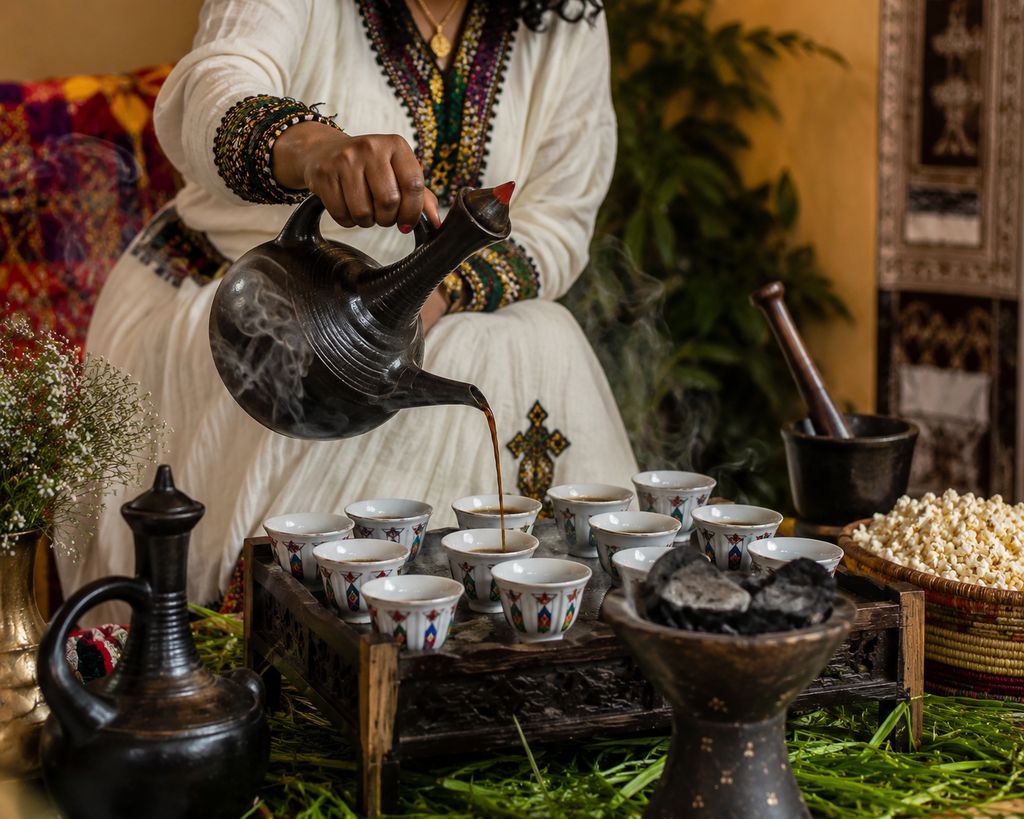
In Ethiopia, coffee is a social ritual, not just a caffeine fix. The traditional coffee ceremony involves roasting green beans over coals, grinding them by hand, and brewing the coffee in a clay pot called a jebena. It is usually served in three rounds, symbolizing the progression of the experience. It is the perfect way to conclude a heavy meal of must-try dishes when visiting Ethiopia.
Practical Tips for Dining in Ethiopia
Eating in Ethiopia is a social event. Here is some practical advice to make your experience seamless:
- Wash your hands: Before and after eating with your hands, it is customary to wash your hands. Many traditional restaurants provide a bowl and water for this.
- The communal aspect: Many meals are served on a single large tray. This is meant to be shared with friends and family, fostering a sense of community.
- Don’t fear the spice: If you aren’t used to high heat, ask for something “not too spicy” or stick to the vegetarian lentil dishes which are generally milder.
- Tipping: In restaurants, a tip of about 10-15% is appreciated, though it is not always mandatory in more casual local spots.
Best Time to Visit for Foodies
While you can enjoy these dishes year-round, visiting during religious holidays like Meskel or Timkat provides a unique opportunity to see massive communal feasts in action. These celebrations often involve incredible amounts of food shared among hundreds of people.
Estimated Costs
Eating in Ethiopia is remarkably affordable for most travelers. A hearty meal at a mid-range restaurant in Addis Ababa will typically cost between $5 and $12 USD. Street food and local cafes can be even more budget-friendly, making it easy to enjoy high-quality food without breaking the bank.
Key Takeaways
- Injera is essential: It is the bread, the plate, and the utensil.
- Try Doro Wat: It is the quintessential Ethiopian meat stew.
- Vegetarian options are elite: Don’t skip the lentil-based stews.
- Embrace the ritual: Coffee ceremonies and communal eating are central to the culture.
Frequently Asked Questions
Is Ethiopian food spicy?
It can be! Many dishes use Berbere, which is quite spicy. However, many vegetarian lentil dishes are much milder, so you can always find something that suits your palate.
Is Ethiopian food gluten-free?
Since the primary base, injera, is made from teff (a gluten-free grain), much of the meal is naturally gluten-free. However, always confirm with your server about cross-contamination or other ingredients in the stews.
Can I eat Ethiopian food with a spoon?
You certainly can, but the traditional and most enjoyable way is to use pieces of injera to scoop up the food.
Exploring the culinary landscape is one of the most rewarding parts of any journey. When you take the time to sit down and engage with the must-try dishes when visiting Ethiopia, you aren’t just eating; you are participating in a centuries-old tradition of hospitality and community. So, grab some injera, find a local spot, and prepare for a flavor explosion.