Things to Do in Rio Beyond the Beach: A Carioca’s Guide

Most visitors spend their entire Rio trip stuck between Copacabana and Ipanema, treating the city like one long beach club with better caipirinhas. That’s the mistake. The real Rio de Janeiro lives in the neighborhoods where tourists don’t venture after sunset, in the hills where samba wasn’t invented for Instagram, and in the markets where locals buy produce, not souvenirs.
Why Most Travelers Miss the Real Rio de Janeiro
The postcard version of Rio is undeniably beautiful. Sugarloaf at sunset, Christ the Redeemer with arms wide open, the curve of Copacabana’s promenade. But here’s what the guidebooks skip: the city’s soul isn’t on the sand. It’s in the chaotic energy of a Sunday feijoada in a family kitchen, the smell of grilled cheese coalho from a street cart at 2 AM, the way a stranger will pull you into a roda de samba because you looked like you needed to dance.
I learned this the hard way. First trip: seven days, barely left the Zona Sul. Second trip: three days in Madureira, Santa Teresa, and the Centro historic district. The second trip changed how I understand Brazil entirely.
Things to Do in Rio That Locals Actually Recommend
If you’re ready to see the city beyond the beach umbrella, start with these neighborhoods and experiences. Each one reveals a different layer of Carioca culture that no amount of beach time can teach you.
Santa Teresa: The Bohemian Soul of the City
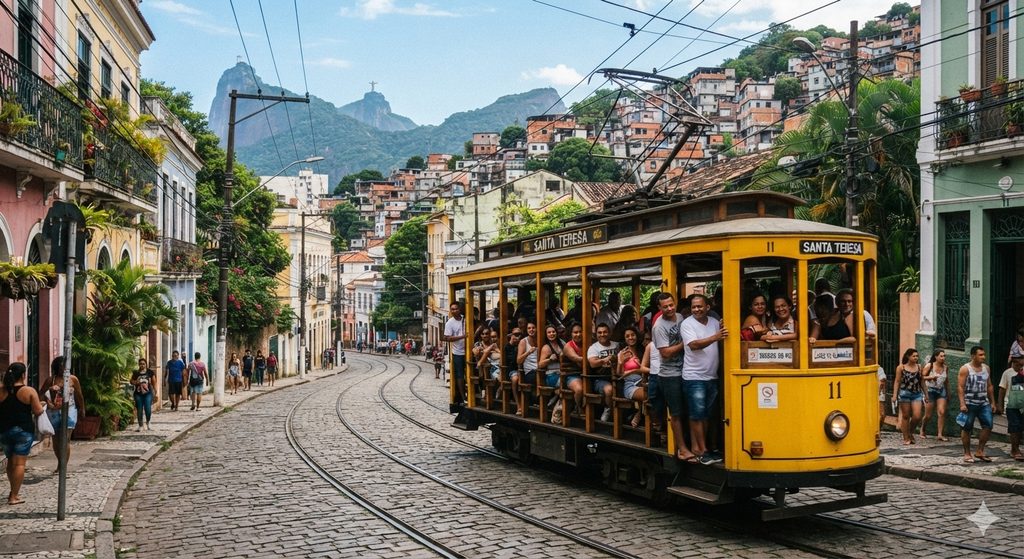
Take the yellow bonde tram up the hill from Centro. The ride itself costs pennies and rattles past colonial mansions, street art, and views that make you understand why Santa Teresa has been Rio’s unofficial Montmartre for well over a century — the bohemian reputation traces back to the late 1800s and early 1900s, when the tram line first connected the hilltop to downtown and an outbreak of yellow fever in the lower city sent wealthy families fleeing uphill, followed not long after by the writers, painters, and musicians drawn to the cooler air and cheap studio space they left behind. It’s grittier and more lived-in than the real Montmartre these days, which is part of the appeal.
Wander Rua Almirante Alexandrino for galleries tucked into crumbling facades. Stop at Bar do Mineiro for the best feijoada in the neighborhood — arrive before noon or wait two hours. The pastel de feira (fried pastry stuffed with cheese, meat, or hearts of palm) from the street vendors near Largo do Guimarães beats any restaurant appetizer. And don’t skip the Selarón Steps (Escadaria Selarón) on the border with Lapa — the late Chilean artist Jorge Selarón covered all 215 steps in more than 2,000 tiles collected from over 60 countries, working on it obsessively until his death in 2013. It’s become one of the most photographed spots in Rio for good reason, even if it does draw a crowd.
Pro tip: Visit Parque das Ruínas at golden hour. The crumbling mansion-turned-cultural-center — once the home of arts patron Laurinda Santos Lobo, who hosted the neighborhood’s literary and artistic salons until her death in 1946 — frames the bay through arched windows. Photographers know this spot. Tour groups don’t.
Centro Histórico: Where Rio’s Past Lives on Weekdays
Downtown Rio empties out after 6 PM, which is exactly why you should explore it during business hours. The contrast between grand imperial architecture and chaotic street commerce tells the city’s story better than any museum.
Start at Praça XV, where the Paço Imperial once hosted Portuguese royalty. Walk toward the Real Gabinete Português de Leitura — a library so ornate it looks like Hogwarts, hidden in plain sight on a busy commercial street. The stained-glass dome alone justifies the detour.
Don’t skip the Mosteiro de São Bento. The Gregorian chant mass at 10 AM on Sundays echoes through baroque gold-leaf interiors. Even non-religious visitors find it moving. Afterward, grab a pastel de bacalhau (cod fritter) and caldo de cana (pressed sugarcane juice) from the vendors outside.
The Saara district, a few blocks north, is Rio’s oldest open-air market. Jewish, Arab, and Brazilian merchants have sold fabrics, spices, and electronics side by side for generations. It’s sensory overload in the best way.
Madureira: The Heartbeat of Samba and Black Culture
Take the metro to Madureira. This is where Rio’s African heritage pulses strongest, where samba isn’t a performance but a birthright. The neighborhood feels different — louder, prouder, unapologetically Black in a country that often tries to whiten its image.
Mercadão de Madureira spans blocks of stalls selling everything from Candomblé ritual herbs to custom Carnaval costumes. The energy is overwhelming. Vendors shout prices over funk carioca blasting from speaker stacks. You’ll find the best acarajé (black-eyed pea fritters stuffed with vatapá and shrimp) from Bahian women who’ve perfected the recipe over decades.
If your timing aligns, hit a samba rehearsal at the Portela or Império Serrano quadras nearby — both schools’ headquarters sit in the greater Madureira area and open their rehearsal nights to the public, typically once a week. A word of caution on expectations: on an ordinary rehearsal night early in the season (roughly July through October), you might see a bateria of several dozen drummers rather than a full ensemble — it’s only as Carnival approaches in January and February that the drum section swells toward the 200-plus percussionists you’d see on parade day at the Sambadrome. Either way it’s a real rehearsal, not a show for tourists, and schedules shift year to year, so check each school’s social media before you go rather than assuming a fixed night.
Pedra do Sal: Where Samba Was Born
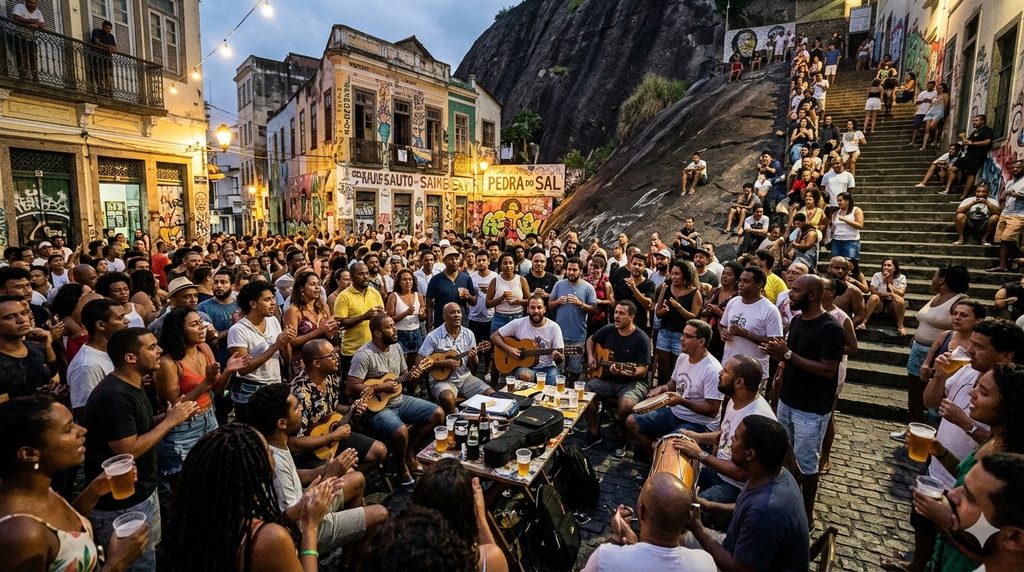
Monday nights at Pedra do Sal in the Saúde neighborhood. This is non-negotiable. The historic rock where enslaved and formerly enslaved Africans once unloaded salt became the cradle of urban samba in the 1910s, in the same neighborhood where Tia Ciata famously hosted the gatherings that produced “Pelo Telefone,” widely considered the first recorded samba. Today, a roda de samba forms spontaneously around the stone steps. No stage. No tickets. Just musicians passing instruments, singers improvising verses, and everyone — everyone — dancing.
Arrive by 8 PM for a spot. Order a cerveja estupidamente gelada (beer so cold it’s slushy) from the corner bar. Watch how the circle opens for a child learning the steps, and how elders correct a young singer’s phrasing with respect. This is living heritage, not a cultural presentation.
Ilha de Paquetá: The Car-Free Escape 70 Minutes from Chaos
Catch the barca (ferry) from Praça XV. The traditional ferry takes around 70 minutes across Guanabara Bay (a faster catamaran service, when running, covers the same route in roughly 35 minutes) and drops you on an island where cars have been banned since the 1990s. Paquetá moves at bicycle pace. Horse-drawn carriages and electric golf-cart-style taxis clip-clop and hum past imperial-era mansions.
Rent a bike at the dock. Circle the island in two hours, stopping at Praia da Moreninha for a swim without the Zona Sul crowds. The water’s calmer here, the vibe familial. Pack a picnic — restaurant options are limited and close early.
Check the current ferry schedule before you go — departures run roughly hourly and the last boat back typically leaves sometime in the evening, but exact times shift with the season, and missing it means an expensive water taxi or an unplanned overnight.
Food Experiences That Define Carioca Culture
Rio’s cuisine reflects its history: Portuguese techniques, African ingredients, indigenous preparations, and immigrant twists. The best meals happen at plastic tables on sidewalks.
Feijoada: The Sunday Ritual
Every carioca family has their feijoada spot. The black bean stew with pork parts (ears, tail, feet, sausage) simmers for hours. Served with rice, farofa (toasted cassava flour), couve (collard greens), orange slices, and hot sauce. It’s heavy. You need a nap after.
Casa da Feijoada in Ipanema does a refined version. Bar do Mineiro in Santa Teresa does the soulful one. Both are correct. Just go on Sunday. Any other day feels wrong.
Street Food Hierarchy
- Pastel de feira: Thin, crispy, fried to order at street markets. Cheese, meat, palm heart, or shrimp fillings.
- Coxinha: Teardrop-shaped fried dough with shredded chicken. The best have catupiry cheese inside.
- Tapioca: Cassava starch crepe cooked on a hot griddle, filled sweet or savory. Coconut and condensed milk or cheese and dried beef.
- Acarajé: Bahian specialty. Black-eyed pea fritter, split and stuffed with vatapá, caruru, shrimp, and pepper sauce. Traditionally sold only by Baianas in white headwraps, a role with roots in Bahian Candomblé tradition.
- Queijo coalho: Grilled cheese on a stick, brushed with oregano and garlic butter. Beach vendors sell these at sunset.
Coffee Culture Beyond the Tourist Cafés
Brazilians drink coffee small, strong, and constantly. Skip the third-wave cafés in Leblon. Stand at a balcão (counter) in any padaria (bakery) and order a “cafézinho” or “pingado” (coffee with a splash of milk). It costs a couple of reais and comes with a glass of water. The ritual takes ninety seconds. That’s the real Rio coffee experience.
Nature Without the Crowds
Everyone does Sugarloaf and Corcovado. Both are spectacular. Both are crowded. These alternatives deliver comparable views with a fraction of the people.
Pedra Bonita: The Paraglider’s View
Hike or drive up Estrada das Canoas in São Conrado. The trail to Pedra Bonita takes around 40 minutes through Atlantic Forest. At the summit, paragliders launch toward the beach below. The view sweeps from Pedra da Gávea to the coastline — no guardrails, no ticket booth, just wind and vertigo.
Go on weekdays. Weekends bring crowds. Bring water—no vendors on the trail.
Parque Lage: Where Jungle Meets Mansion
At the foot of Corcovado, this early-20th-century mansion houses an art school and café. The courtyard pool reflects palm trees and the Christ statue peeking through foliage. Trails lead into Tijuca Forest — one of the largest urban forests in the world. Monkeys, toucans, and waterfalls exist 20 minutes from Ipanema.
The café serves excellent breakfast. Arrive at 8 AM when the gates open. By 10, the Instagram queue forms.
Dois Irmãos: The Vidigal Hike
Take a moto-taxi up to the Vidigal favela to the trailhead. The hike to Dois Irmãos (Two Brothers) peak takes about 90 minutes round trip. The payoff: panoramic views of Leblon, Ipanema, and the ocean that make Sugarloaf look flat.
Hire a local guide at the base. This supports the community and helps ensure you don’t miss the turnoffs. Community-led tourism has grown substantially in Vidigal in recent years, and respect remains essential — you’re a guest in someone’s neighborhood, not a spectator at an attraction.
Nightlife That Isn’t for Tourists
Lapa’s arches draw crowds Friday and Saturday. The street party under the aqueduct is legendary — and pickpocket central. For nights with more music and less chaos:
- Bip Bip (Copacabana): A tiny bar where choro (instrumental samba precursor) happens nightly. Musicians sit at a table. You stand on the street. No cover. Arrive early.
- Leviano (Lapa): Two floors of live samba, forró, and MPB. Locals dance. Tourists watch. The cover varies by night.
- Casa da Matriz (Botafogo): Alternative venue in a converted house, known for rock, indie, and eclectic DJ nights across two dance floors. Currently open Wednesday through Saturday — check its hours before you go, since they’ve shifted over the years.
- Quadra da Mangueira (Mangueira): Rehearsal nights are open to the public, historically on Saturdays but shifting by season and by year as Carnival approaches. The bateria is widely considered one of Rio’s best. Go with a local if possible, and confirm the current night on the school’s social media first.
Markets Worth Your Morning
Feira de São Cristóvão: Northeastern Brazil in One Warehouse
This massive covered market replicates a northeastern town square. Hundreds of stalls sell artesanato, medicinal herbs, cachaça, and food from Bahia, Pernambuco, Maranhão. Live forró bands play into the night. The baião de dois (rice and beans with cheese) and carne de sol (sun-dried beef) rival any restaurant.
Take the metro to São Cristóvão station. Walk five minutes. Stay for lunch. Stay for the music.
Feira Hippie de Ipanema: Sunday Tradition
Every Sunday, Praça General Osório fills with artisans selling ceramics, leather, jewelry, and art. It’s touristy, yes, but also where cariocas buy gifts. The food section — pastéis, caldo de cana, açaí bowls — draws families. Go hungry. Bargain politely.
Practical Logistics for the Curious Traveler
Getting Around Without Stress
- Metro: Clean, safe, covers Zona Sul, Centro, and North Zone. Buy a rechargeable RioCard for the metro/BRT/some bus lines, or use the Bilhete Único Carioca system, depending on which lines you’re combining. Avoid rush hours (7–9 AM, 6–8 PM).
- Uber/99: Affordable and widely used. Generally considered safer than hailing a street taxi at night. Confirm the license plate before entering.
- BRT: Bus rapid transit connects Barra da Tijuca to the metro. Useful for reaching western beaches.
- Walking: Only in Zona Sul during daylight. Elsewhere, use transport.
Safety: Real Talk, Not Fear
Rio has crime. Pretending otherwise is naive. Being paranoid ruins the trip. The middle ground: don’t wear flashy jewelry, don’t flash your phone unnecessarily, don’t walk alone at night in unfamiliar areas, and don’t resist a robbery if it happens. Use hotel safes. Carry only the day’s cash. Trust your gut. If a street feels wrong, leave.
Favelas: Some offer safe, guided tours that benefit communities. Others are active conflict zones. Research current conditions. Never enter alone. Never photograph residents without permission.
Best Time to Visit Rio Beyond Peak Season
- December–March: Summer. Hot, humid, crowded, expensive. Carnaval happens within this window (dates vary by year). Book everything months ahead.
- April–June: Autumn. Pleasant temperatures, fewer tourists, lower prices. Generally the best overall value.
- July–August: Winter. Mild (roughly 20–25°C / 68–77°F), drier, low-season prices. Great for hiking.
- September–November: Spring. Warming up, jacaranda trees bloom purple across parts of the city. A solid shoulder-season sweet spot.
Pro Tips from Someone Who Learned the Hard Way
- Learn basic Portuguese greetings. “Bom dia,” “por favor,” “obrigado/a” change every interaction.
- Carry small bills. Vendors rarely have change for 100-real notes.
- Download offline maps. Cell service drops in tunnels and hills.
- Eat lunch like a Brazilian: main meal at midday, light dinner. Restaurants offer “prato feito” (set lunch) for around 25–40 reais.
- Sunday is family day. Many shops close. Plan markets, parks, and beaches instead.
- Tip around 10% in restaurants. It’s often already included on the bill as “serviço incluso” — check before adding more.
- Drink coconut water from the beach vendors. Machete-chopped, straw inserted, consumed immediately.
Key Takeaways
- Rio’s essence lives in neighborhoods, not beaches.
- Santa Teresa, Centro, Madureira, and Pedra do Sal reveal the city’s cultural DNA.
- Food is the fastest route to understanding carioca identity.
- Nature experiences exist beyond the famous landmarks — with fewer crowds.
- Nightlife rewards those who venture beyond Lapa’s tourist circuit.
- Samba rehearsal nights are real and open to visitors, but schedules shift by season — always confirm before you go.
- Shoulder seasons (April–June, Sept–Nov) offer the best balance of weather, crowds, and price.
Frequently Asked Questions
Is it safe to visit neighborhoods beyond the tourist zone?
Yes, with standard urban precautions. Santa Teresa, Centro (daytime), Madureira, and Pedra do Sal during events are visited regularly by tourists and locals alike. Use Uber at night, stay aware, and hire local guides for favela-adjacent hikes like Dois Irmãos.
How many days do I need for things to do in Rio beyond the beach?
Minimum of three full days. Five allows deeper immersion. Prioritize based on your interests — culture, nature, food, or music — rather than trying to hit everything in this guide at once.
Do I need Portuguese to enjoy non-touristy Rio?
Not fluently. Basic phrases plus a translation app work fine. But effort matters — cariocas appreciate attempts. A smiled “bom dia” opens doors that silence keeps closed.
What’s the best way to experience authentic samba?
Pedra do Sal on Monday nights for the spontaneous roda. Quadra rehearsals (Portela, Mangueira, Império Serrano) for the organized, full-bateria version — just confirm the current rehearsal night before you go, since these shift by school and by season. Avoid “samba shows” bundled with dinner packages; those are built for tourists.
Can I visit a favela ethically?
Only through reputable, community-based tours where residents visibly benefit. Vidigal and Rocinha have established programs. Never go alone, never treat it as a spectacle, and research operators thoroughly before booking.
Rio de Janeiro rewards the curious. The beaches will always be there — golden, crowded, photographed a million times. But the city that stays with you? That’s the one you find when you put down the guidebook, hop on a tram, follow the sound of drums, and let a stranger teach you to dance. The things that matter most don’t appear on postcards. They appear when you stop looking for them.